
It’s the best time of the year. Draft season! There is no better time to take a look at a full Bengals Mock Draft and see how things could play out. The Bengals front office is likely doing similar exercises currently in hopes of projecting how the board will fall and how to find the best value at positions of need in each round. I used a combination of what I think the Bengals could do based on draft history, size thresholds, NFL Combine meetings, and needs along with my own analysis on prospects. Draft Big Boards from Daniel Jeremiah, Dane Brugler, PFF, and the consensus Big Board were used to help determine which players are most likely to be available at each pick. In a perfect world, I would love to see the Bengals trade back from pick 17. I did not have them doing so in this scenario because it does not feel very likely to happen. Cincinnati has not traded back in the first round since 2012. They typically do a good job projecting which 4 to 6 players will be available in their range, do extensive research on them, and want to take one of them. Who they bring in on “30 Visits” over the next month should give us a better idea of their targets at 17. The NFL allows teams to bring in 30 players to their facility after the Combine to get to know them better. Most teams, Cincinnati included, bring in a handful of guys from each round that they think will be available and they are interested in. Last year, the projected 1st rounders the Bengals used a 30 Visit on were: Amarius Mims (Pick #18), Taliese Fuaga (#14), Troy Fautanu (#20), Johnny Newton (#36), Jared Verse (#19), and Chop Robinson (#21). When they were on the clock at pick 18, all except Fuaga were available, and the only one available after pick 21 was Newton who had a foot injury that dropped him down boards. The Bengals had 10 picks last year, and 8 of the picks (including Mims) were guys they used 1 of their 30 Visits on. You want guys you feel comfortable with and have spent a lot of time on. Keep an eye on who the Bengals prioritize on these visits as we see that information leak over the next month. I can only see the Bengals moving back in Round 1 if they are confident they can still land one of their Round 1 30 Visit prospects. With only 6 picks this year, it would be a huge help if they could add more by moving back in one of the first 3 rounds. In this scenario, I am going to stick and pick to show what it could look like if they stay put.
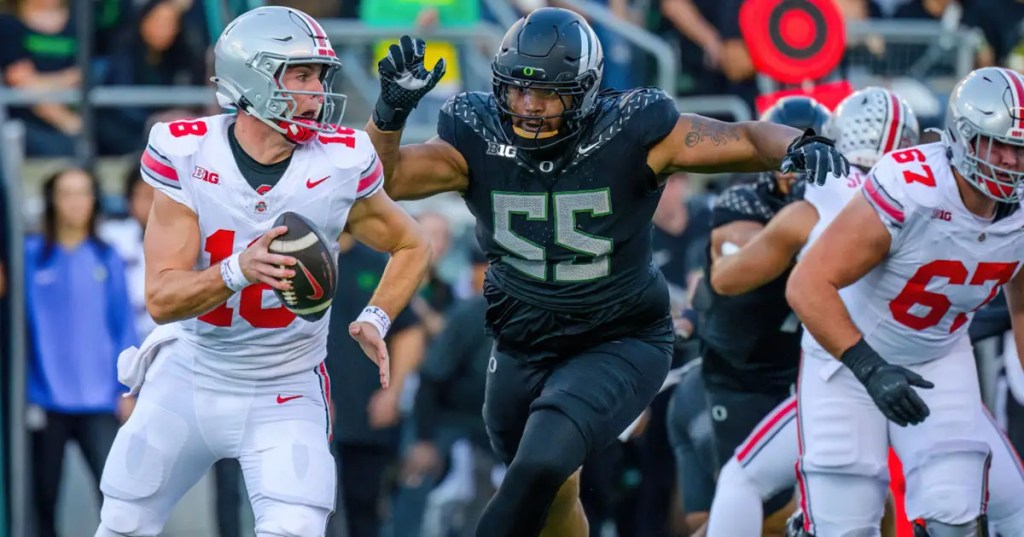
17: Derrick Harmon, DT, Oregon
- Height: 6’4½”
- Weight: 313
- Age: 21.7 years old
- RAS: N/A
- NFL Comp: Christian Barmore
The biggest need for the Bengals is still DL, particularly rushing the passer. Trey Hendrickson accounted for 38.4% of the Bengals’ QB pressures and 48.6% of the Bengals’ sack total in 2024. The Bengals are working to find a deal with Trey, but even assuming they can keep him, they must get more pressure from other players. The DT room in particular lacks any pass rushing juice. They brought back BJ Hill, who is a solid starter but just an average pass rusher, and he was easily the best of the bunch last year. New free agent Nose Tackle TJ Slaton is a strong run defender, which was also needed, but will likely not see the field on passing downs. 2024 picks Kris Jenkins and McKinnley Jackson could both take steps, but both profiled as good run defenders and average pass rushers as prospects. Neither did much to dispute their lack of pass rushing ability in 2024. Those four can all be good contributors in the rotation moving forward, but Cincinnati desperately needs to find a player with DT1 potential and pass rushing ability. Derrick Harmon fits the bill perfectly.
Derrick Harmon played his first 3 years at Michigan State. Coming out of high school, he was a massive 6’4.5”, 359 pounds. He worked hard to shed some of that weight in East Lansing but still was most effective as a run defender early in his career. His 3rd year at Michigan State, he got down to about 325 pounds and saw more productivity as a pass rusher. His Pass Rush Win Rate (PRWR) jumped from 4.4% in 2022 to 9.5% in 2023 (top 50 among DTs). Harmon entered the portal and transferred to Oregon for the 2024 season. He spent the offseason working on his body and dropped down to about 310 pounds, with the goal of playing more snaps and becoming a better pass rusher. It worked. Harmon became one of the best interior pass rushers in college football. His 55 pressures were the most by any DT, 11 more than any other player. His 86.3 PFF Pass Rush Grade was 2nd in the country. And his 17.6% PRWR was 2nd in the nation, only 0.2% behind first place Aeneas Peebles. He did all this while routinely playing 40+ snaps per week against one of the toughest schedules in college football. Unlike some productive DTs, Harmon isn’t a pass rush specialist, he also was a stout run defender. His 80.5 PFF Run Defense Grade was 23rd in the nation among DTs.
The NFL Combine only helped Harmon’s stock. Some players cut weight to run faster, Harmon came in around his playing weight, 6’4.5” (83rd percentile among DTs) and 313 pounds (71st percentile). He also measured in with monstrous 34.385-inch arms (85th percentile). In addition to size, he showed off the athleticism, running a 4.95 second 40-yard dash (82nd percentile). The mass and arm length are what separates Harmon from many other DTs. He has the size to take on double teams and anchor in the run game, but he has the explosiveness to rush the QB as well. He can play every down in the NFL, which is what you want out of a true DT1. Pass rush efficiency stats have a strong correlation of carrying over to NFL pass rushing success, so Harmon’s elite 2024 metrics are a massive plus. The biggest weakness in his game currently is too many missed tackles. He had a 26.2% missed tackle rate in 2024, among the worst in the country for DTs. He could have tallied way more sacks and run stops had he cleaned up his tackling. He wasn’t a great tackler at Michigan State, but he was significantly better than he was at Oregon. It is a real weakness and something that needs to be talked about and worked on with him. However, it does not scare me off from taking him at pick 17. Even when he did not pick up a sack, the constant disruption forced clean up sacks for teammates and errant throws from opposing QBs. The Bengals need another disruptor outside of Hendrickson on this DL. Derrick Harmon can be a centerpiece of their young defense moving forward.
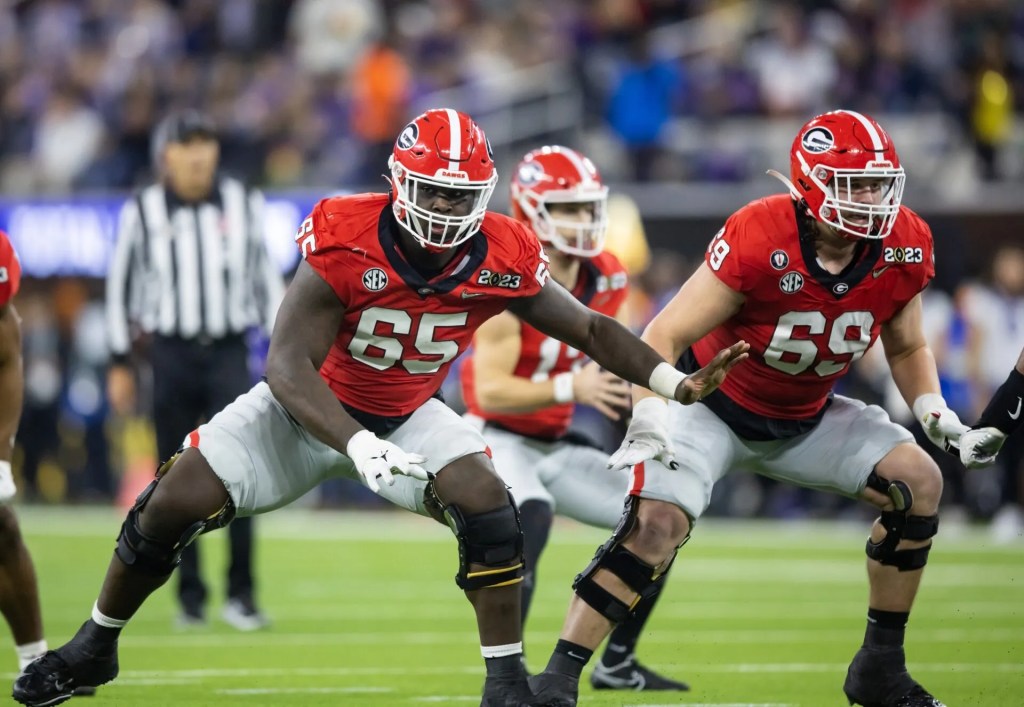
49: Tate Ratledge, RG, Georgia
- Height: 6’6½”
- Weight: 308
- Age: 24.0 years old
- RAS: 9.96
- NFL Comp: Sam Cosmi
The Bengals have needed better Guard play since letting Kevin Zeitler walk out the door in… checks notes… 2017. The main reason? They haven’t invested much at the position. The best Guard they had in that time was (before his injuries) Alex Cappa who they signed to a 4/35 year deal in 2022 free agency. That is by far the most they have paid a Guard. The only Guard they have taken in the first 3 round since the Zeitler draft in 2014 is 2021 2nd rounder Jackson Carman. We all know how that worked out. Unfortunately, you will probably never have great Guards by paying pennies to external free agents and only taking flyers on day 3 guys. At some point you must pick one on Day 2. Oh, and don’t take a day 3 talent like Carman just because your Owner knows his trainer! Tate Ratledge has been my favorite true Guard in this class since watching his film last summer, and he has only helped his case since.
Ratledge has always been an athlete. The son of a longtime football and wrestling coach, he started his high school career like many great OL, playing Tight End before packing on weight and moving inside. That experience plus starring both as a basketball player and track and field athlete in high school, explains why he is one of the most athletic OL prospects ever. He placed third in the state of Georgia in 2019 for shot put, another sport that produces many great trench players. After beefing up from Tight End, Ratledge never left the field in high school, starting at Left Tackle and Defensive Line. Oh, and he also was the starting Punter. That’s right. A 6’6’, 322-pound Punter. And he was good! He had a 41-yard net punting average. That is higher than Bengals “legend” Brad Robbins’ 40.1 career net punting average. Simply put, no matter the sport or skillset, Ratledge is probably going to excel in it. He showed this to be true at the NFL Combine. Measuring in at 6’6.5”, 308 pounds, with 32.25-inch arms, Ratledge posted a 9.96 out of 10 Relative Athletic Score (RAS). Out of 1,592 Guards that have tested pre-draft since 1987, Ratledge has the 5th highest RAS in the entire group. Vertical and broad jumps show how explosive an OL is in his legs to fire off the ball and move defenders. Ratledge’s 32” vertical jump (88th percentile) and his 9’5” broad jump (95th percentile) show the explosiveness he has. His 1.72 10-yard split (90th percentile), 4.97 40-yard dash (97th percentile), and 7.38 3-cone drill (94th percentile) show how rare he moves for a player of his size. Athleticism is one of the highest correlated predictors of NFL success at OL, and Ratledge blows just about every other OL out of the park. And he did it all sporting a fantastic mullet.
Don’t let the freaky athleticism lead you to believe that is all Ratledge has. He is also a very polished Guard on the field. He is a 3-year starter for Georgia. After being a reserve his first two years in Athens, Ratledge was a full-time starter his redshirt sophomore season at RG for the 2022 Georgia national title winning team. Despite it being his first year as a starter, Ratledge dominated as a pass protector. He posted an elite 87.1 PFF Pass Blocking Grade (4th in the country among P5 Guards). In True Pass Sets, Ratledge had an 85.6 Grade (2nd in the country). He had an average PFF Run Block Grade of 63.2. In 2023, he continued his dominance in pass pro with an 87.4 PFF Pass Block Grade (3rd in the country). He also made strides as a run blocker, finishing with a 71.9 PFF Run Block Grade. He was named a 2nd AP Team All-American. In 2024, Ratledge started off strong with great performances in his first 2.5 games before picking up an ankle injury that caused him to get tightrope surgery on his left ankle and miss 4 games. Despite clearly being in discomfort, he toughed it out through injury the rest of the season and helped Georgia win another SEC title and make the CFP. Ratledge, who was voted a Team Captain by his peers, said he wanted to put his body on the line for his teammates. Even at less than 100%, he still played pretty well down the stretch. He is now fully healthy as evidenced by the Combine. The athleticism is elite, but what makes Ratledge so good is also his strength and IQ. He is one of the most powerful players in this class. His anchor in pass pro can stall any DT’s bullrush. In the run game he can displace defenders and send LBs flying to open holes for his RB. He is excellent at picking up stunts and communicating with the other OL to pick them up. He never takes a play off. When no D-Lineman is directly in front of him, he is looking for work and delivers punishing blows to rushers that the C or RT is blocking. As a 5th year college player, Ratledge is on the older end of the class, but he profiles as a Day 1 starter with Pro Bowl upside at the NFL. Not a lot of projection needs to be done to see how he fits in a lineup immediately.
It is no secret that the Bengals are interested in Ratledge. They met with him at the Combine and also sent OL Coach Scott Peters and OC Dan Pitcher to Georgia’s Pro Day in March. Ratledge played RG next to Bengals starting RT Amarius Mims in 2022 and 2023, so there is already chemistry there, not to mention Mims’ insight into Ratledge as a player and leader. Like all Bengals OL, he is big. Ratledge is at his best in pass pro, which is the trait most important to the Bengals as one of the league’s most pass heavy teams. Bengals DC Al Golden coached against Ratledge in the CFP, so he also can provide a strong opinion on what he has seen on tape. What made the Bengals draft great in 2020 (Burrow, Higgins, Wilson) was drafting leaders who love football. They have gotten away from that recently (Jackson Carman and Jermaine Burton come to mind). Tate Ratledge, a Team Captain who Kirby Smart described as “He’s Tate. I mean, he’s a lunch pail, working man’s guy…” is the type of piece that can help get Cincinnati back to where they want to be.
81: Andrew Mukuba, FS, Texas

- Height: 5’11¼”
- Weight: 186
- Age: 21.7 years old
- RAS: 5.12
- NFL Comp: Jordan Poyer
In new DC Al Golden’s defense, Free Safety is one of the most important and difficult positions to play. Simply put, he asks a lot out of his FS. The past few years at Notre Dame, Golden had Xavier Watts who became an All-American known for his ball hawking prowess. If Watts is available at pick 49, he will be strongly in consideration, but with the lack of starting Guard level signings in free agency, it may be wiser to target that position first. If that is the case and Mukuba is available at 81 (as is projected), I’d run the card in for him. Golden at Notre Dame played more Cover 1 than any defense in college football. This is typically rushing 5 with all man coverage and one roving deep Safety. He also ran a lot of Cover 1 Robber which is typically rushing 4 with 1 deep safety zone and one middle of the field zone with everyone else in man coverage. Golden also dialed up more blitzes than most. The Free Safety is often tasked with covering over the top from sideline-to-sideline, needing to have elite zone coverage instincts and range. Golden also emphasizes the importance of making plays on the football. However, this FS also must be able to hold his own in man coverage against slot WRs and TEs, because at times he will disguise his coverage or blitz and have this player in man to switch things up. As the last line of defense, he also must be a great tackler. Playing from distance he must be able to fly downhill and fit the run fearlessly. Finally, he must have a very high IQ and be a communicator on the field. Golden ensures his DBs know all the rules of the defense depending on different motion and alignments they see on the field in real time (something Anarumo struggled with), and he needs his DBs to be able to quickly call out to each other what they see and what adjustments they are making pre-snap. Anyone who watched the Bengals last year is probably reading this and saying to themselves “Well Geno Stone can’t really do any of those things…” And unfortunately, you are correct. Stone was fine in Baltimore where they played a lot of quarters coverage and did not ask him to cover a lot of ground on the back end. He was tasked with more last year and really struggled. Playing full-time Free Safety in Golden’s defense will expose him even more in my opinion. Stone does not have the speed or range to cover from sideline to sideline. Stone is also one of the worst tackling and run defending Safeties in the league. His 45.5 PFF Run Defense Grade last year was last among all starting Safeties and his 17.7% missed tackle rate was 3rd worst among starting Safeties. And his Coverage Grade was only a 53.7 (10th worst among starting Safeties), so it’s not like he made up for it there. Simply put, he needs to be upgraded if they want Golden to have a chance to really shift the output of this defensive unit. Andrew Mukuba can be that guy.
A 4 star recruit out of Texas, Mukuba arrived at Clemson in 2021 fresh off a CFP appearance and won the starting Free Safety job as a true freshman. He was an impact player immediately in DC Brent Venables’ system, posting a 77.0 PFF Defense Grade, 80.1 Run Defense Grade, 88.2 Tackling Grade, and 74.5 Coverage Grade. He was named ACC Defensive Rookie of the Year for his work. In 2022, Brent Venables left for the Oklahoma HC job, and Mukuba struggled. Playing a mix of FS and slot CB, Mukuba posted a poor 50.2 PFF Defense Grade. His junior year, he played mostly slot CB and rebounded some with a 71.9 PFF Defense Grade, however he still was not quite at the level of his freshman season. Mukuba transferred to Texas before his senior season and quickly became one of the top Safeties in college football. Texas moved him back to his best position, Free Safety, and he was a monster. Mukuba notched a career high 5 interceptions. He posted a 90.0 PFF Defense Grade (2nd among all Safeties) and 89.7 Coverage Grade (3rd). His run defense grade bounced back to a solid 75.8 grade. Playing plenty of deep zone coverage, Mukuba was elite, posting an 88.3 Zone Coverage grade (4th among all Safeties). His experience in the slot also helped him when asked to play man. His 85.1 Man Coverage Grade ranked 9th among all Safeties. When targeted in 2024, Mukuba allowed a mere 12.1 Passer Rating. This is the lowest passer rating allowed by any Safety in the past two seasons. Texas asked a lot out of Mukuba and he delivered. His coverage instincts are some of the best you will see from a prospect and he has the speed to match it. He has a track background and his 4.46 40-yard dash time at the Combine confirmed what the film shows. While he is a bit undersized at 5’11”, 186 pounds, but Mukuba routinely flies downfield and lays hits on ball carriers. He has the occasional missed tackle where his size shows up, but he also delivers some blows and never backs down from a collision. He is certainly passable as a tackler, and his coverage ability and versatility more than make up for it.
Andrew Mukuba is as high character of a player as you will find. Born in Zimbabwe and living there the first 8 years of his life, Mukuba learned what struggle looked like. While his single mom went to work, he and his 6 siblings did what they could to help out, including walking 4 miles to retrieve water for drinking, cooking, and bathing. They moved to Austin, Texas when he was 9 years old and his mom worked tirelessly as a hotel housekeeper. Mukuba says when he makes it, he wants to repay his mother for all the sacrifices she made for their family. Former Clemson DC Brent Venables said of Mukuba “He’s easy to pull for, such a remarkable young guy. First and foremost, he kind of epitomizes what we want our program to be about and getting our players to think the right away and have the kind of perspective and thankfulness and see the positive as opposed to the negative, and let anything he’s gone through bad growing up or seen family members go through, that he’s allowed that to fuel him and develop him instead of destroy or define him.” Venables made Mukuba the first true freshman to start at Safety for Clemson since 1973. Despite calling one of the nation’s most complex defenses, he knew his freshman was up to the task from Day 1. The Bengals would really like to add a Free Safety that is able to come in and be a plus starter immediately, and I’d bet on Andrew Mukuba being the man for the job.
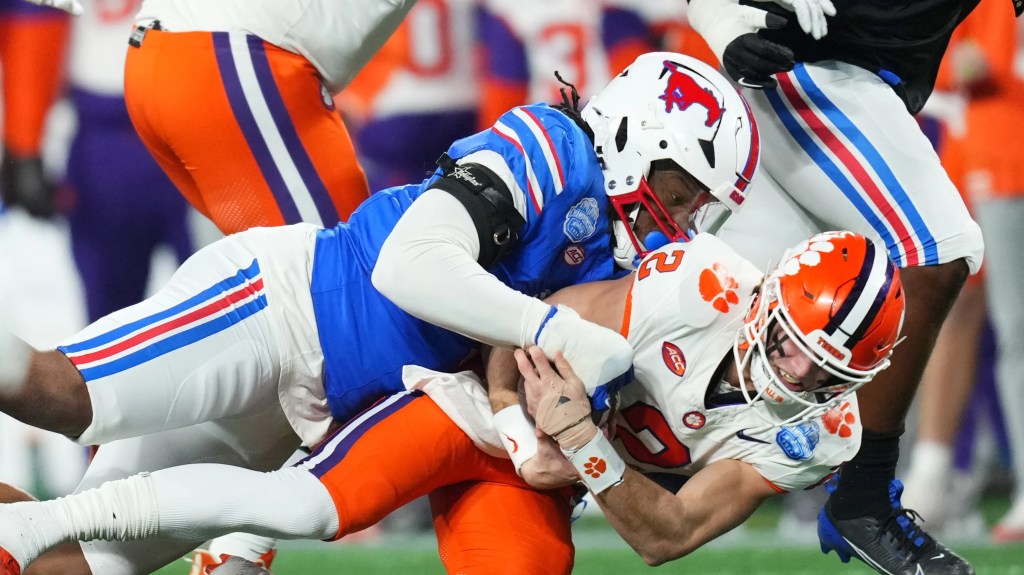
119: Elijah Roberts, EDGE, SMU
- Height: 6′ 3⅝”
- Weight: 285
- Age: 23.3 years old
- RAS: 6.82
- NFL Comp: John Franklin-Myers
The Bengals’ biggest need is pass rush, and taking a good rusher like Harmon in Round 1 should not stop them from grabbing another, especially in such a deep DL class. The Bengals’ staff reportedly still believes in Myles Murphy, but his 3 career sacks and average PRWR are hard to count on. He and Joseph Ossai, who just signed a one-year deal to come back, still are both under 25 years old with potential, but the reality is that they may just be rotational players. Cincinnati should continue to throw resources at EDGE. If any of the young guys can breakout and become a good starter, that is ideal. If not, at least you have a strong rotation of guys you can keep fresh and use situationally to get the best out of the group and hopefully get more consistent pressure. Perhaps Al Golden scheming up more blitzes and DL stunts can help as well. When it comes to EDGE, it is not secret that the Bengals prefer bigger DEs. Contrary to some beliefs that this was an Anarumo thing, this preference predated him and is evidently more of a Duke Tobin one. The lightest EDGE the Bengals have drafted since Tobin became Director of Player Personnel in 1999 is 255-pound Jordan Willis in 2017. Is it possible Al Golden could request to tweak this threshold a bit with his use of a “Viper” weakside DE that drops into coverage occasionally? Maybe. But I think Golden would still lean toward bigger DEs if all else is equal. I have no issue with big DEs, but if you are going to take one, you may as well take one that can rush the passer, right? That’s what 6’3.5”, 285 pound Elijah Roberts does best.
A 4-star recruit from Miami, Florida, Roberts opted to stay home and go to The U out of high school. After being mostly a depth player for 3 years, he transferred to SMU ahead of the 2023 season. Roberts instantly became one of the best pass rushers in the nation. In 2023, he posted a 91.3 PFF Defense Grade which was 2nd among all EDGEs in the nation, trailing only 2024 1st round pick Laiatu Latu. His 91.6 Pass Rush Grade was 3rd among EDGEs and his 71 pressures were 2nd. Roberts had a 21.8% PRWR which was tied with 2024 NFL DROY Jared Verse for 3rd best in college football. In true pass sets, his 93.3 Pass Rush Grade (2nd) and 34.2% PRWR (3rd) only emphasized his prowess as a pass rusher. Roberts was also a good run defender, posting a 79.5 Run Defense Grade (25th). In 2024, SMU moved from the American to the ACC. Roberts didn’t miss a beat. He posted a 91.1 PFF Defense Grade which was 3rd among EDGEs behind surefire Round 1 picks Mike Green and Abdul Carter. Roberts’ 60 pressures (6th), 90.7 Pass Rush Grade (8th), and 22.4% PRWR (5th) were all among the elite. And in True Pass Sets, his 36.8% PRWR was 1st among all EDGEs in the country (1.7% better than Top 5 pick Abdul Carter). His 81.3 Run Defense Grade was 21st.
Roberts doesn’t have the explosiveness or bend of other EDGEs, but he uses his length, power, and elite hand fighting to physically dominate and win reps. Despite his size, he was at his best as a stand up outside rusher at SMU. However, his size and power makes him a viable option to move around the DL, particularly on passing downs. While his best move is his powerful bull rush, he has a pretty large bag of moves he can beat Tackles with including a two-hand swipe and chop-rip move. He is able to counter when the first move doesn’t quickly win. In the run game, he has a strong anchor to not get moved off his spot. He sometimes loses his gap assignment in the run game, and his tackling took a step back this year, but he has the tool set to continue to grow in this area. Elijah Roberts is one of the most underrated EDGEs in this class. It is extremely rare to see a player with his size and production being consistently projected outside of the first two days of the Draft. He is an ideal fit for what the Bengals look for in an Defensive End and would greatly help their desire for more pass rush juice.
153: Jack Kiser, LB, Notre Dame

- Height:
6'1⅝" - Weight: 231
- Age: 24.6 years old
- RAS: 7.68
- NFL Comp: Robert Spillane
The Bengals’ LB room certainly needs reinforcements. Logan Wilson remains a good LB1, but it gets murky after him. Cincinnati was hoping to add a starting LB in free agency and cut Germaine Pratt, but the LB market ended up exceeding projections and the Bengals were not willing to meet it. Pratt remains on the team for now, but that could change before camp. LB3 Akeem Davis-Gaither headed to Arizona. The Bengals signed Oren Burks from Philly who has had good moments, particularly in the playoffs last year after Nakobe Dean went down, but will be 31 by the time camp rolls around and has mostly been a LB3. It would not be surprising in the slightest to see the Bengals address the position earlier in the Draft, but in this scenario, Al Golden is able to bring in a player whose strengths and weaknesses he knows better than anyone in Notre Dame Linebacker Jack Kiser.
An older prospect, Kiser spent 6 years at Notre Dame. The last 4 of which, he was an important contributor. His final 3 seasons were under Al Golden. Kiser is Notre Dame’s all-time leader in games played. He was a legend in Indiana before ever playing a down for the Irish. Playing both ways as a QB and LB at Pioneer HS, Kiser won back-to-back state titles. In 2018 he was named Indiana Mr. Football and led his squad to a 15-0 record with 11 shutouts, outscoring opponents 936-39 on the year, including a 60-0 victory in the state finals. Senior year, Kiser tallied 1,183 passing yards and 18 passing TDs, rushed for 2,109 yards and 44 TDs, and recorded 159 tackles, seven interceptions, six forced fumbles and five fumble recoveries. He also made the state finals podium in track and field throwing both shotput and discus. He is a plus athlete with great instincts, likely helped by his QB background. From 2021 to 2023, Kiser was typically the Irish’s third LB. He played 300+ snaps in all 3 seasons and recorded a 75.0+ PFF Defense Grade in all of them, including a 90.3 Grade in 2023. He was also a core special teamer in those years. He was named Notre Dame Special Teams Player of the Year in 2023. In 2024, he was voted a Team Captain and became a full-time starter at LB. He posted a very strong 83.0 Defense Grade with an 86.8 Run Defense Grade, 90.5 Tackling Grade, and 62.9 Coverage Grade. Golden also used him effectively as a blitzer. Kiser recorded 18 pressures in 73 pass rush opportunities. He is the best tackler in this class, with a career missed tackle rate of just 4.6%.
Kiser is a high floor, low ceiling day 3 option at the position. Teams need to be able hit singles on Day 3 of the Draft and find potential average starters and good depth to fill out their roster. Kiser can be that. The downside: he turns 25 in September. He will likely never be significantly more than what is right now. His most inconsistent area is in coverage. He doesn’t look particularly comfortable in space when in man coverage against smaller players. He can survive in zone and against certain TEs. Kiser can be a contributor from day 1 with what he brings as a run defender and blitzer. He will also contribute in every phase of special teams at a high level and be a positive addition to the locker room from a leadership aspect. Golden, knowing Kiser’s limitations, would be able to put him in a role he can succeed early on. It’s rare to see a Day 3 player compete for a starting spot immediately, but Golden’s familiarity with Kiser and Kiser’s experience with Golden’s defense could allow the 25-year-old rookie to step in quickly and keep his head above water at an area of need.
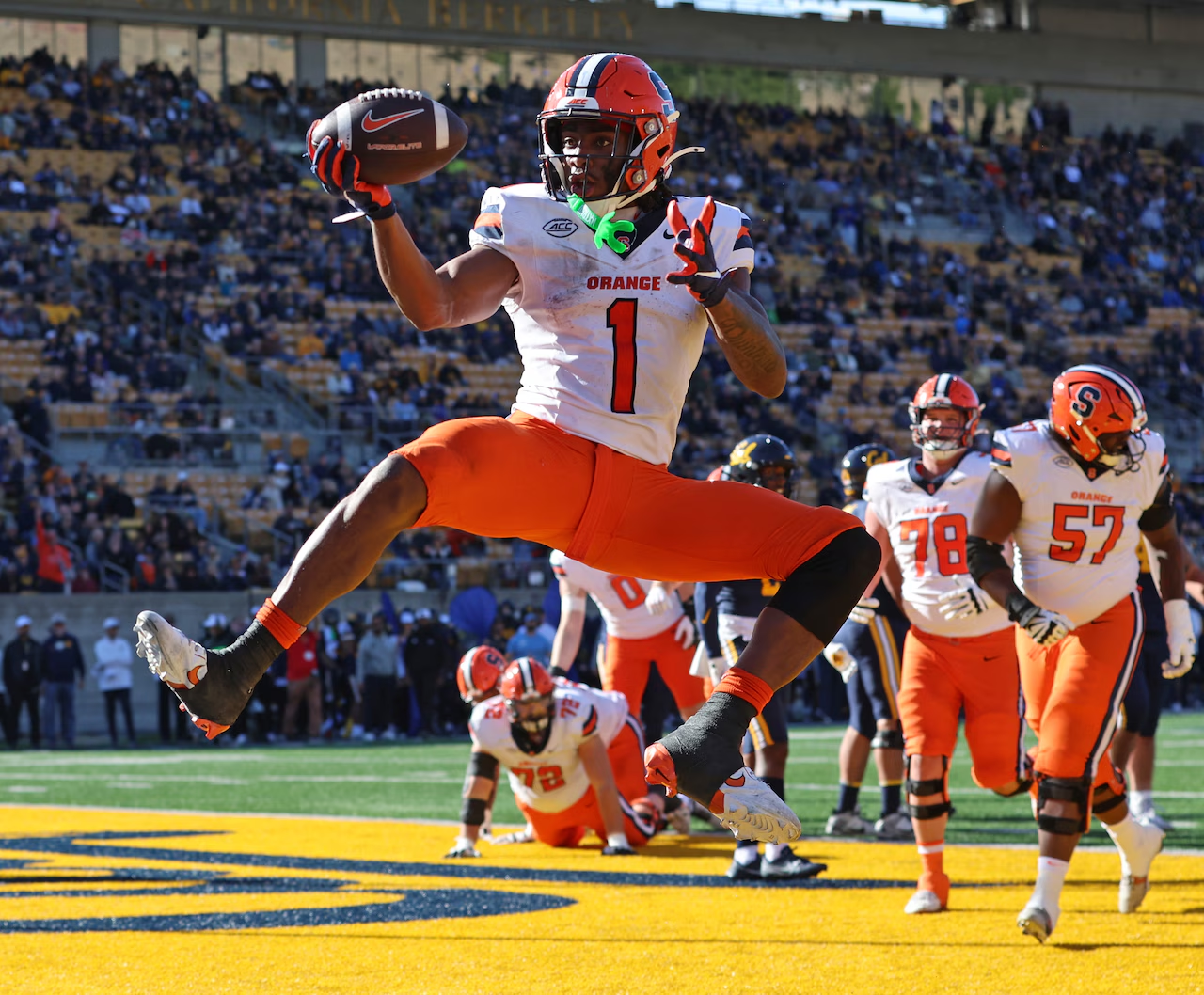
193: LeQuint Allen Jr., RB, Syracuse
- Height:
6'0⅛" - Weight: 204
- Age: 20.7 years old
- RAS: 7.68
- NFL Comp: Rachaad White
Just like when Bengals took Chase Brown in Round 5 in 2023, they should take advantage of a similarly deep RB class this year by adding another backfield piece. The Bengals have needed a 3rd RB for years. Last year they failed to address it, and a midseason injury to Zack Moss led to them having to burn this year’s 7th Round pick on a half season rental of Khalil Herbert. Chase Brown will be the main back and has shown a growing ability to play on all 3 downs. Cincinnati brought back Samaje Perine, who at this point is a plodding runner, but can be counted on in pass protection when needed. Adding an RB3 (potential RB2) to this room that is versatile can make them a better offense and keep Brown fresh and explosive. LeQuint Allen Jr. from Syracuse is a do-it-all RB that fits the mold of what the Bengals want to continue to do on offense.
Allen is the third youngest player in the entire draft class, he will be just 20.72 years old on draft night. The production he has already put up at his age shows a high ceiling. While not the biggest or strongest, Allen is incredibly versatile and plays with toughness. From New Jersey, Allen played both ways in high school as a RB/WR and LB. In 11 games his senior year, he tallied 1,658 rushing yards, 204 receiving yards, and 25 TDs on offense. At Linebacker he had 129 tackles, 13 TFLs, 9 sacks, and 5 interceptions. He was named New Jersey Gatorade Player of the Year. At the Combine, Allen measured in at 6’0”, 204 pounds. He lacks elite breakaway speed but is a good athlete. He has great vision that allows him to find running lanes, and he navigates backfield traffic well with agility. He has great ball security, with only one lost fumble in 524 career carries. He is a good gap scheme runner between the tackles. The vast majority of his carries at Syracuse came out of shotgun or pistol, which is exactly how the Bengals use their RBs. He can be a solid part of a committee on early downs. Allen put up over 1,000 rushing yards in each of the past two seasons and 25 total rushing TDs in that span. However, where Allen really shines is on passing downs. Cincinnati’s coaches always preach how important pass protection is for a RB. Allen was the best pass pro back in the country last year. His 80.9 PFF Pass Block grade led all RBs and he allowed just 1 pressure, 0 hits, and 0 sacks in 130 pass protection snaps. Allen’s Linebacker background is evident when picking up blitzers. He is fearless putting his body on the line to protect the QB. He also shows excellent technique to not drop his head or lunge at blitzers along with the intelligence to process who his assignment is after the ball is snapped. He complements this attribute with elite receiving ability. He led all RBs in 2024 with 64 receptions. He had 529 yards and 4 TDs as a receiver. An interesting wrinkle that the Bengals added last season was using Chase Brown out wide and in the slot aligned as a WR more. When the RB is a dangerous enough receiver that they can be a threat when lined up at WR, it allows the offense to disguise formations and keep defenses guessing on what personnel they want to use to defend them. And it gives Burrow the chance to audible into different looks at the line. LeQuint Allen is a perfect fit for that. Syracuse lined him up in the slot on 74 snaps last year (1st among all RBs) and 39 snaps out wide (5th). Allen shows an ability to run an advanced route tree downfield both as a WR and RB. He is also terrific getting YAC in the screen game.
The addition of Samaje Perine as a bigger back means the Bengals do not have to draft a back similar to that in April. Adding a back like Allen to the room let’s them do all of the fun Chase Brown stuff they did last year and more. When Brown became the lead back and started getting 3rd down opportunities last year, he was one of the best blocking RBs in the league. Adding Allen means you have 3 terrific pass blocking backs, so you are comfortable using any of the 3 in your protection plan on any down. The Bengals just started scratching the surface of using the RB position in dynamic ways in the passing game last year, taking it to the next level this year could make their offense even harder for defenses to figure out. The Brees/Payton Saints teams of the late 2000s/early 2010s always featured two good receiving backs (Reggie Bush, Darren Sproles, Pierre Thomas). LeQuint Allen Jr. is the perfect “Joker” Running Back that can be used in a variety of ways to stress a defense and add more layers to an elite Bengals offense moving forward.
 Blog in the Back with Kelley and Lou
Leave a comment