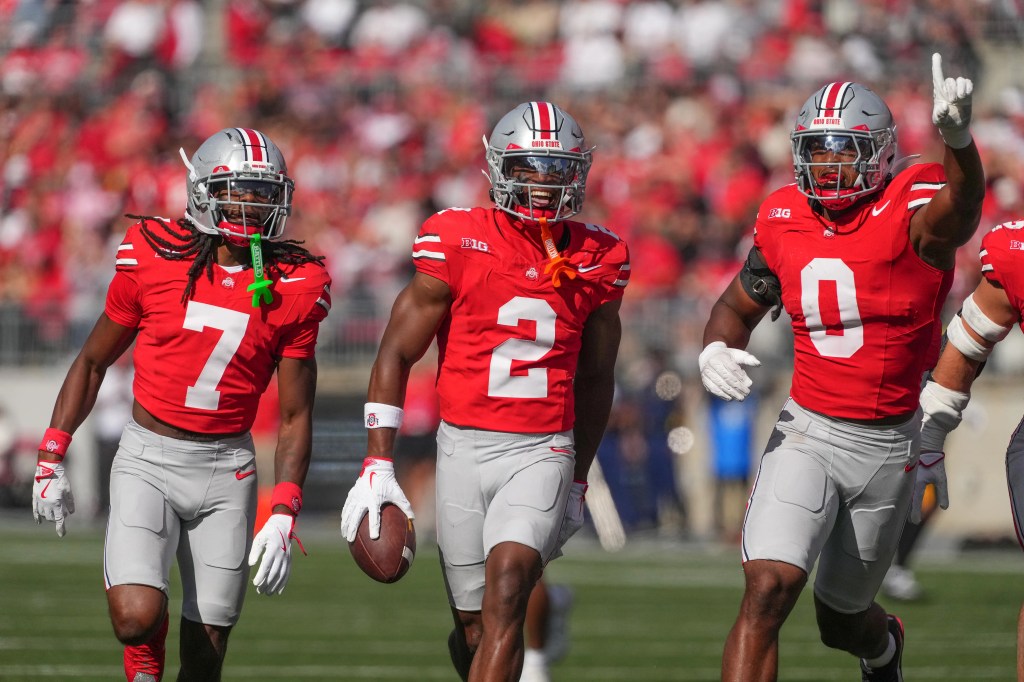
With the bulk of NFL Free Agency now behind us, and the NFL Draft less than a month away, it is time to jump into the first Round 1 Mock Draft of 2026. While teams say they want to take the best player available, every team takes team needs into account to some level when drafting. With big free agent and trade additions accounted for, what direction do teams go now?
Here’s how I see the first round of the 2026 NFL Draft shaking out. Mock Draft 1.0. Let’s go!
1. Las Vegas Raiders
Fernando Mendoza – QB, Indiana
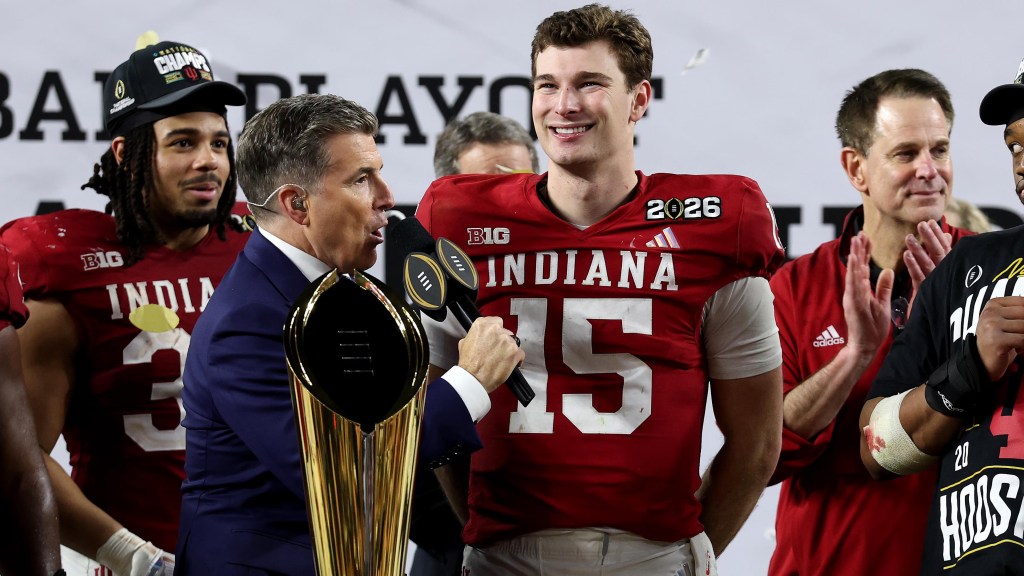
The closest thing the Raiders have had to a Franchise QB in the last 20 years is Derek Carr. In a Draft with one strong QB prospect, this is a no-brainer. Many in sports media these days feel the need to declare a player “Generational” or “Bust”. Mendoza falls in neither category. I see him being a very good NFL QB. He has the measurables and arm talent to make all the throws. His processing and IQ are very high and his drive to be great is evident. These are the most important traits when it comes to being a successful NFL QB. But he is not some perfect prospect. Indiana’s offense protected him a lot. They were a (extremely successful) run first team and a lot of their passing offense came off of RPOs. They also played with the lead for the vast majority of their games in 2025. Mendoza was not put in difficult spots very often. However, when he was, he delivered in the big moments. He led a game-winning drive against Penn State capped off by an Omar Cooper Jr. toe-tap touchdown in the back of the endzone. 3rd and 6, up 3 with 2 minutes left in the Big 10 Title Game vs. OSU’s historically great defense? Perfect 35 yard fade ball to Charlie Becker to seal it. Multiple big spots in the 4th Quarter of the National Championship? Back shoulder to Becker on 4th and 5. Heroic 12 yard TD run on 4th and 5. The kid was nails in the clutch all year. My only big concern, other than having the offense run through him as a dropback passer much more in Vegas, is his ability to handle pressure. NFL defenses are elite at finding ways to generate pressure. Too often, Mendoza struggled when pressured, lacking the speed to run away or the jazz feet to make a guy miss. You don’t have to have the athleticism of Josh Allen or Lamar Jackson to be elite in the NFL, but even Mahomes and Burrow have elite pocket maneuverability to extend plays and create explosives. His ability, or lack thereof, to improve that aspect of his game may be the difference between becoming Jared Goff/Kirk Cousins or one of the game’s elites. Regardless, Vegas is getting a very good QB to build around.
2. New York Jets
Arvell Reese – LB, Ohio State
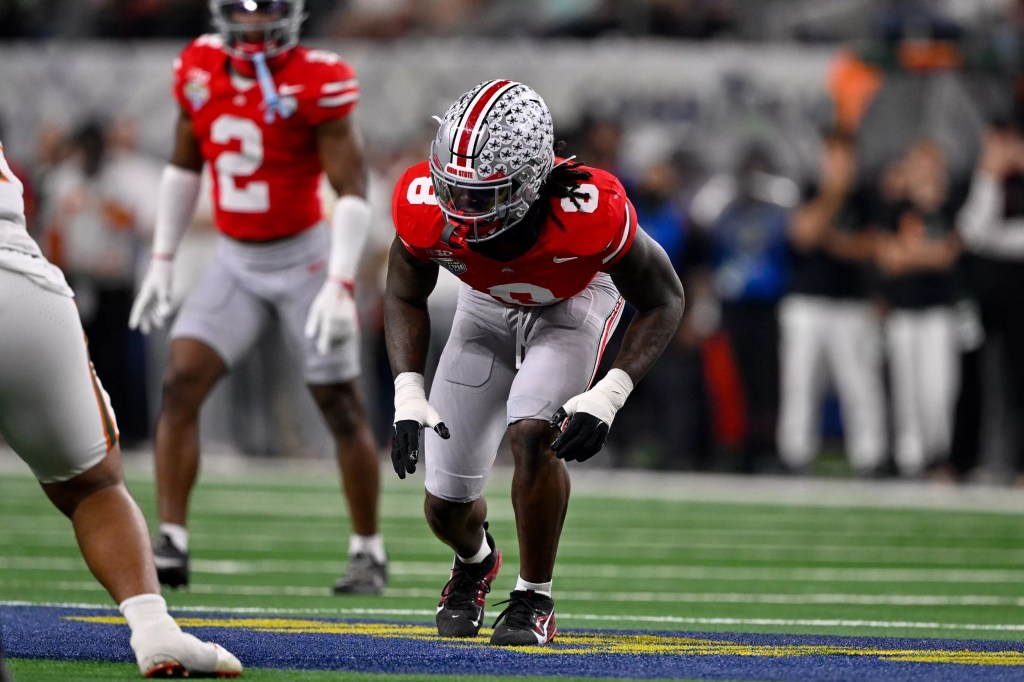
Reese is one of the most beloved prospects in this class and the NFL seems to like him just as much as analysts do. He has two things you can’t teach: Speed and Power. He is 6’4”, 241 and ran a 4.46 40 yard dash at the NFL Combine. This shows up when he was used as a QB Spy. He is an elite pursuit player, hawking down prey like some sort of predator you see on the Nature Channel. He also has excellent power in hands to jolt blockers off of him. Reese had a bullrush against Illinois where he forklifts the Left Tackle and sacks the QB. However, where Reese is best is actually in the run game. The power he has to go through and discard Offensive Tackles at his size is rare and the pursuit speed to track down those ballcarriers makes it impossible to run on him. And YET… I wouldn’t take Reese at 2. Many project him as an EDGE at the next level. I still like him as a top 10 player, but I think there is more projection than I am comfortable with at pick 2. We rarely saw Ohio State use him as a true EDGE. He did have some nice reps there, but it is a very small sample size. People often confuse traditional pass rush with blitzing, especially when looking at advanced metrics. Many of Reese’s pressures and sacks came as a QB Spy or as a blitzer. DC Matt Patricia drew up some brilliant blitzes. That is still extremely useful. I just see Reese as more of a run-stopping and blitzing Linebacker than a true EDGE. He is solid in shallow zone coverage, but has not been asked to do too many advanced things there. How high do you take that? It’s a fun debate. Those that see him as the top prospect in the class, often compare him to Micah Parsons. I see him, in the right scheme, playing a role similar to Pro Bowl LBs like Minnesota’s Andrew Van Ginkel or former Patriots’ LBs Jamie Collins and Dont’a Hightower. Either way, the sky is the limit when it comes to Reese, and it seems like the NFL will take him somewhere in the top 3 picks. The Jets shoot for the stars here at 2 with another pick coming at 16.
3. Arizona Cardinals
David Bailey – EDGE, Texas Tech
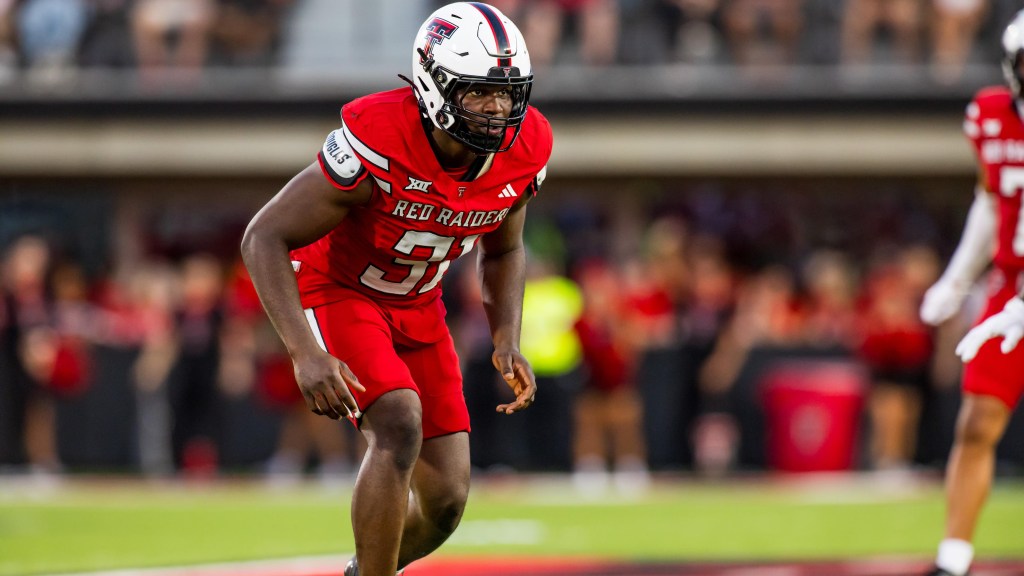
Arizona could go a lot of ways here, and Right Tackle is arguably their top need. But when you are this bad of a team, you have needs in plenty of places. Don’t go down a tier if you think there is a better player on the board at another premium position. With no Alt/Sewell level OT in this class, the Cardinals go EDGE with David Bailey. There is a lot to like with Bailey. He has adequate size at 6’3.5”, 251 pounds and nearly 34 inch arms. He has elite explosiveness with the quickest first step in the class. The testing backed this up with his 4.50 40 yard dash and 96th percentile broad jump. If you want an EDGE to step in and rush the passer on day 1, Bailey is the easiest choice to make. He has been productive as a pass rusher throughout his career. At Stanford, he was used mostly as a DPR (designated pass rusher), and consistently was among the highest in the nation when it came to PRWR (Pass Rush Win Rate), albeit in a limited role. He transferred to Texas Tech as a senior and stepped into a full time role. Bailey finished with a 38.6% PRWR on true pass sets (3rd in the nation) and 15 sacks (1st). He threatens the outside shoulder of OT’s every play, and uses a Ghost Move and Inside Spin move to get by them. He can also win the Power on occasion as a rusher. Bailey lacks the elite bend and ankle flexion that some of the elite speed rushers have. In certain situations that should lead to a QB hit, OTs are able to run him around the arc past the pocket. He never became a full time player at Stanford due to limitations as a run defender. He improved at Tech, but still is below par in that area. He makes some splash plays but he has a thin lower half and struggles to anchor and set the edge in the run game. Some teams may currently see him as a passing downs player only. Even with that possibility, Bailey is a top 10 talent in the class. His elite athleticism and production is a safe bet to translate into a high level pass rusher at the next level. And if he can add weight to his lower half, he has Pro Bowl potential. Arizona pairs him with Josh Sweat to form a freaky fast EDGE duo to chase down QBs.
4. Tennessee Titans
Jeremiyah Love – RB, Notre Dame
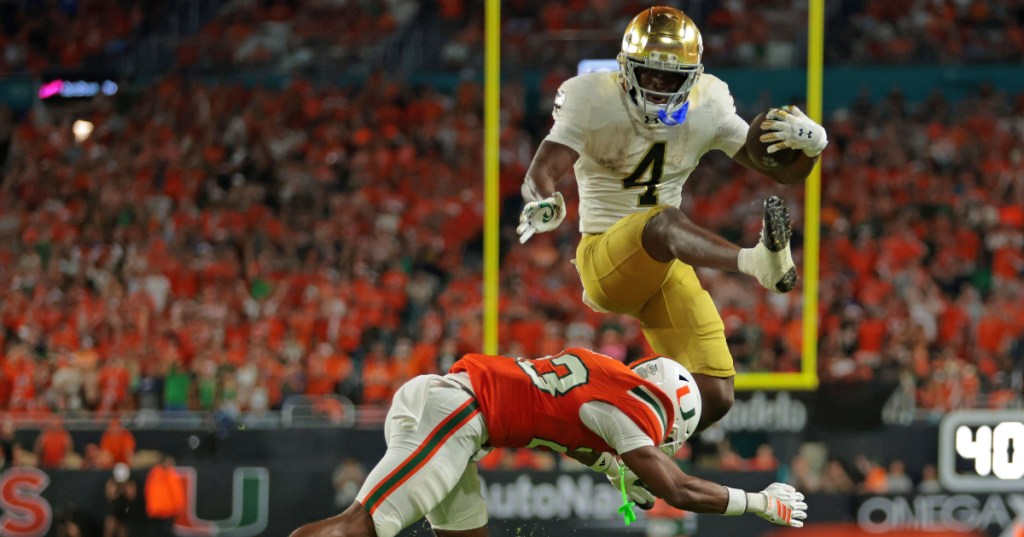
There is real buzz about Tennessee’s love for Jeremiyah Love, who some have as the top talent in the draft regardless of position. There will always be debates about how early is too early to take a RB (I think this is a little early personally), but as we’ve seen over the years, elite RBs go top 10. Jeanty, Bijan, Saquon, Zeke, the list goes on. Whatever you think of the RB value conversation, there’s no debate that Love is a special player. He is a taller back standing a 6’0” with average size (212 pounds). The first thing that stands out about Love is breakaway speed. It’s rare. He ran a 4.36 40 yard dash and it showed often on tape at Notre Dame. Love led the nation with 23 carries of 20+ yards in 2025. Splitting time with RB2 in this class Jadarian Price, Love had just 199 carries. That means a whopping 11.6% of his carries were for 20+ yards. Many RBs have speed, but Love also has great vision to find and get through the hole quickly. When he gets to the second level, he doesn’t dance too much. He makes a strong cut to freeze a LB or S and shoots off. When he hits his top speed, he is gone. He has solid power to churn out extra yards through contact. He has zero career fumbles and shows adequacies in pass pro (there is a learning curve for every rookie RB, but I don’t see this being an issue at the next level). He has good hands as a receiver, but Notre Dame did not have him run a deep route tree too often. He probably has some untapped potential in that area. I expect Love to be one of the better RBs in the league as a rookie. If he is taken #4 overall, he will be the 7th highest paid RB in the league in 2026. However, if you were to ask me what player is most likely to be a perennial Pro Bowler in this class, I’d probably say either Love or Caleb Downs. For a new coaching staff with a young QB, taking the can’t miss weapon is an attractive option.
5. New York Giants
Sonny Styles – LB, Ohio State
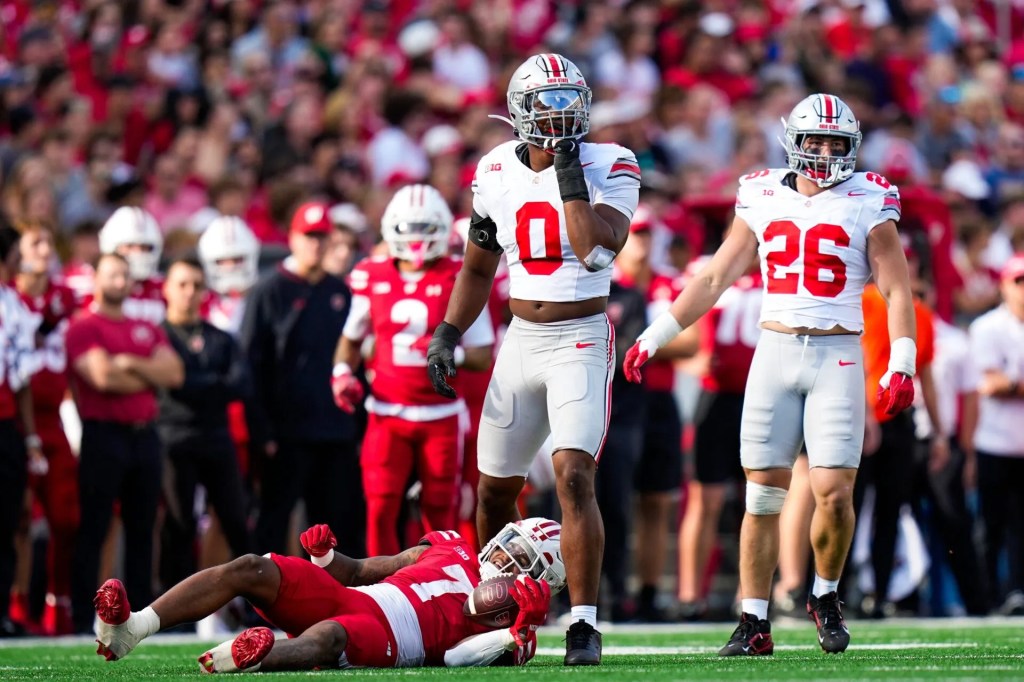
I have Sonny Styles ranked as the #1 player in the entire class, and I have zero issue taking him top 5 here. People question the value of LB in today’s league, but I would argue it is making a resurgence. Partly, because they are really hard to find. There’s legitimately only 7-8 really good ones in the entire NFL. To find a LB that is great against the run and pass with plus athleticism is so rare. Sonny Styles was built in a lab to play LB. The former state champion basketball player at Pickerington Central had MAC and A10 offers to play college hoops. However, as a 5 star football recruit, the choice was easy. He started his OSU career playing as a jumbo Strong Safety as a true sophomore, where he played well before moving to Will Linebacker as a Junior. He had a breakout campaign that year with 6 sacks and 43 run stops. There was still a few growing pains, including missed tackles, in his first year at the position, but I believed he was going to be a top 50 pick had he declared last year. Instead, he came back for his senior year and became a monster. Styles slid over to Middle Linebacker and wore the green dot as the defensive signal caller for Matt Patricia’s defense (on a team with Caleb Downs!!). He was elite in all facets. Styles checked in with an 88.6 PFF Defense Grade (4th among all LBs), 86.9 Coverage Grade (6th), and an 87.4 Run Defense Grade (10th). His tackling issue was solved. Styles finishes with a 2.2% Missed Tackle Rate (2nd) and a 91.6 PFF Tackling Grade (1st). He was also used as a blitzer. He has 142 pass rush snaps in his two years at LB and recorded a pressure on a whopping 23.9% of them. He can play any Linebacker spot and excel, and his Safety background gives him more experience in deep zones than most LBs. If that wasn’t enough, Styles (unsurprisingly to those that have watched him) had one of the greatest NFL Combine performances of all-time. At 6’5”, 244 pounds Styles had a 4.46 40 yard dash (96th percentile for LBs), a 43.5 inch vertical jump (99th), and 11’2” broad jump (98th). The size and explosiveness is special and the tape is every bit as good. His film against Indiana in the Big 10 Title Game is as good as it gets for a Linebacker. The son of an NFL Linebacker, Sonny also excels in the off-field aspects of the game. He was voted a Team Captain by his teammates and his coaches voted to give him the “Block O” #0 jersey as a senior, which is given to the player that best exemplifies toughness, accountability, and the highest of character in Ohio State’s program. Despite being a senior, Sonny will be just 21.4 years old on Draft Day, and the sky is the limit for him. Selfishly, I’d love for him to slide to the Bengals at 10, but the Giants pair him here with new signing Tremaine Edmunds to form a big, athletic LB duo for years to come.
6. Cleveland Browns
Monroe Freeling – OT, Georgia
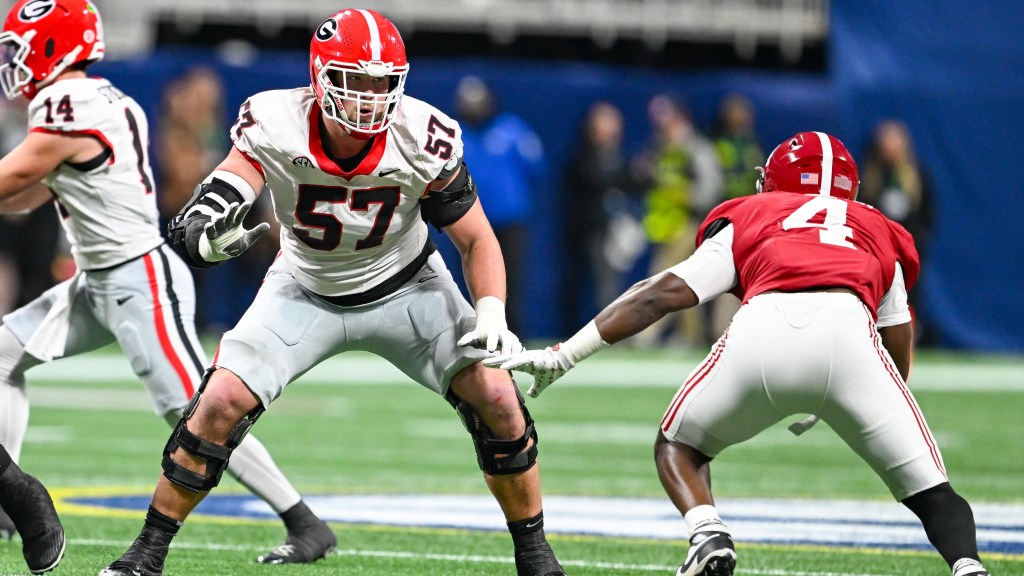
The Browns obviously need a lot, and you could justify them picking any position on offense. Ultimately, I think it comes down to WR or OT. Whether you believe in Shedeur taking a massive leap or are already gearing up for a 2027 QB Draft, making sure a good Offensive Line is in place is vital to give any young QB a chance in Cleveland. After some floor-raising moves in the Free Agent and trade markets, the Browns are a Left Tackle away from having, what appears to be, a passable 5-man unit. They take a swing on Georgia Left Tackle Monroe Freeling here. Freeling has been a late riser, not moving into the first round conversation until late in the year. In a class full of Right Tackles and Tackle/Guard tweeners, Freeling is a true Left Tackle and has the highest potential when it comes to physical gifts. Spencer Fano and others face size questions, but Freeling does not. Standing over 6’7” at 315 pounds with 34¾ inch arms, Freeling exceeds every minimum threshold with ease. At the Combine, Freeling posted scores above the 93rd percentile in the 40 yard dash, 10 yard split, vertical jump, and broad jump, and finished with a 9.99 RAS (Relative Athletic Score). The easy athleticism is spotted in his movement ability on the field when he climbs to the second level on runs. He also has good pocket range and can mirror EDGEs better than most. Freeling’s 86.1 PFF Pass Block Grade ranked 5th among OTs in 2025. He is still somewhat raw in some technical areas, and needs to fill out his frame a bit more. He lacks some power in both the run game and in his anchor as a pass protector. He is not a day 1 finished product, but at 21.8 years old on Draft Day, he has the potential to be elite if a team can help him get there. Live through a rollercoaster 2026, and you may just get a great OT in 2027. Freeling is not too dissimilar to another former inexperienced Georgia OT, Amarius Mims, who figured things out mid way through year 2 and had an elite second half to the 2025 season. Browns’ GM Andrew Berry values age, athleticism, size thresholds, and upside in the Draft and Freeling checks every box. In a perfect world, Cleveland would love to move back a few spots, pick up additional Draft capital, and still take Freeling. But in this scenario, they take their guy at pick 6.
7. Washington Commanders
Carnell Tate – WR, Ohio State
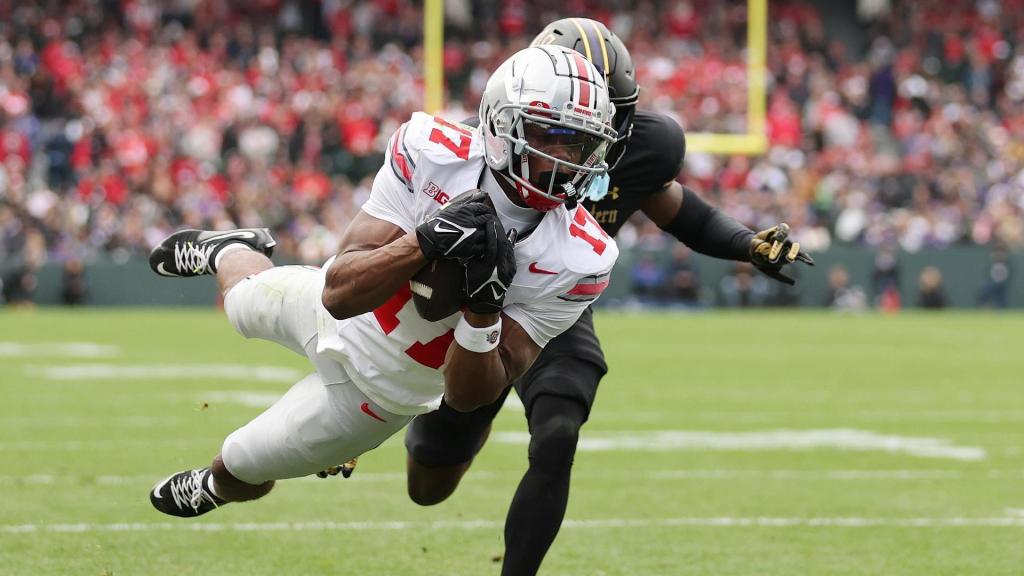
Washington supplemented their defense with a handful of free agent signings including EDGE Odafe Oweh, LB Leo Chenal, S Nick Cross, and DT Tim Settle. That frees them up to address offense here. Many believe this is the floor for Jeremiyah Love, but with him gone the Commanders target the top WR on the board in Carnell Tate. Terry McLaurin turns 31 this year and is coming off an injury-plagued season. The rest of the WR room is Luke McCaffrey, Dyami Brown, Treylon Burks, and Van Jefferson. Not exactly an inspiring group. Tate can be a top option for Jayden Daniels for years to come. He is underrated because so much of the attention at Ohio State is given to true sophomore WR and future top 5 pick Jeremiah Smith, but Tate has blossomed into a star in his own right. Ohio State has continually churned out star WRs every year and Tate is the next in line. The Chicago native is considered the best football player to come out of Marist High School since my co-blogger Louis DePasquale graduated in 2016. The 6’2”, 192 pound Tate is a long striding WR who can stack CBs and threaten downfield. He has some of the best ball skills, hands, and body control in the class. He routinely makes acrobatic catches along the sidelines and caught 12 of 14 contested catch opportunities in 2025. What really separated Tate this year from previous years was his development as a route runner. He improved massively at utilizing leverage and snapping off routes as a junior. He also is good at sitting down in the zone and working back to the football. He still saw the majority of his production on a more basic route tree, but it is clear that he is capable of more at the next level. He shows a willingness to block downfield in the run game, which most star college WRs do not. Tate’s only major knock is his below average ability after the catch, lacking elite wiggle or power to maximize yards with the ball in his hands. However, with his downfield ability and hands, it is easy to envision Tate as a WR1 in the NFL. He will be an immediate weapon in a Washington offense that desperately needs one.
8. New Orleans Saints
Mansoor Delane – CB, LSU
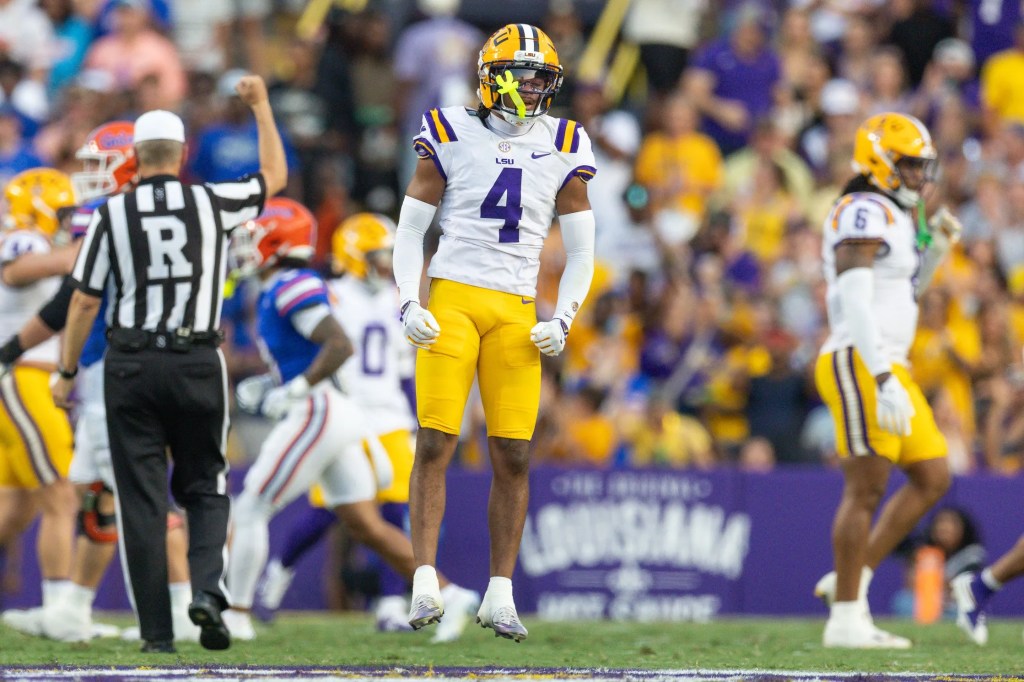
The Saints have hammered the trenches in round 1 recently, but they take the top Cornerback in Mansoor Delane at pick 8. The former Virginia Tech CB transferred to the Bayou for his senior year and went from Day 2 pick to a unanimous top 15 selection. If you want a CB1 that can excel in man coverage, then Delane is your guy. His 89.1 PFF Man Coverage Grade ranked 2nd in the country behind only Notre Dame true sophomore and future top 10 pick Leonard Moore. Delane had 138 man coverage snaps in 2025 and was targeted just 14 times, allowing only 6 catches for 68 yards. His intelligence and fluidity lets him run routes for the receiver. He also has good instincts in zone and off-man coverage to anticipate and jump routes. PFF credited him for just 4 receptions for 58 yards in 175 zone coverage snaps in 2025. Delane did not allow a TD or have a penalty in 2025. He shows good physicality in the run game and is happy to lay the wood on WRs to break up a pass. He had just a 10.6% missed tackle rate in both 2025 and for his career, a very solid number for a DB. The only real negative on Delane is he has below average length. The length does not seem to limit him in press man coverage, because his hip fluidity and route recognition are so high level, and I’ve hardly ever seen him get beat deep. After running a 4.38 40 yard dash at his Pro Day, Delane checked the final box and is a firm top 10 player in this class. Delane profiles as an immediate starter on the outside with the potential to become a high-end CB1 on his rookie contract. New Orleans makes him their first Round 1 CB since taking Marcus Lattimore in 2017, with the hope that Delane (and the rest of their Draft) can match that level of impact.
9. Kansas City Chiefs
Rueben Bain Jr. – EDGE, Miami
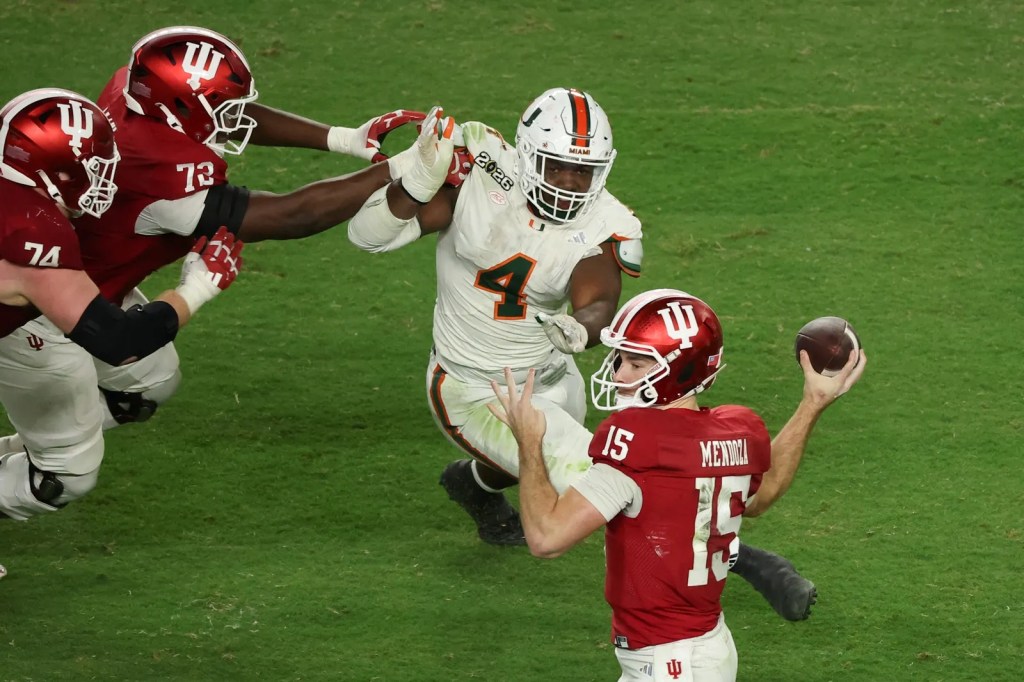
When people think of the Chiefs, they think of the loaded roster they had 2-3 years ago. This is NOT that team. There are holes at CB and EDGE, upgrades needed at WR and OL, Travis Kelce and Chris Jones are on the decline, and Pat Mahomes is coming off a torn ACL. They missed the playoffs before Mahomes was even injured and lost CB Trent McDuffie, FS Bryan Cook, CB Jaylen Watson, and LB Leo Chenal in free agency. They have draft capital, but they need to nail these picks. They start here by picking my top DL in the class in Rueben Bain Jr. Bain is a do-it-all DE who excelled in the biggest games. He was at his best early in the season against Notre Dame and throughout Miami’s CFP run. He led all of college football with 83 pressures and an elite 30.3% Pass Rush Win Rate in True Pass Sets. What makes the efficiency so impressive is that Bain’s workload at Miami is similar to Maxx Crosby in Vegas. He rarely ever comes off the field. Partly because he has an incredibly high motor. But also, what puts him above David Bailey for me, is that Bain is an elite run defender as well. He has incredible ability to anchor, set the edge, and take on double teams. You rarely find college EDGEs with his ability as a pass rusher be so advanced as a run defender. As a rusher, he uses violent force for a nasty bull rush. Unlike many power rushers though, Bain has an expansive bag of pass rush moves. He uses chops and swipes to win with finesse, and can bend the corner better than just about any 265+ pound EDGE not named Myles Garrett. The only concern from people in league circles is his unusual measurements for a top EDGE prospect. Standing a little over 6’2” (16th percentile) with 30.875 inch arms (1st percentile), Bain does not look like your typical top end EDGE. Simply put, I do not care. What is funny, is Bain has heard this all before. He was ranked a fringe top 70 player and the 11th best EDGE in his High School class. You may say “Hey that is pretty good!” However, Bain started all 4 years at South Florida HS Powerhouse Miami Central. They won the state title all 4 years he was there, and he was the best player on the team his final 3 years. His junior year, they beat IMG Academy. As a senior, Bain had 29.5 sacks and was named Florida POTY en route to a 4th straight state title. He is one of the best high school football players in the history of Florida. And still, recruiting “experts” did not rank him as a top 10 EDGE in his class because of his non-prototypical dimensions. The 10 EDGEs ranked ahead of Bain watched him terrorize the CFP. None of those 10 are even in this Draft class. They will watch as Bain goes top 10 in the NFL Draft three years out of high school. Don’t be the next idiot to doubt Rueben Bain Jr. He is going to prove you wrong.
10. Cincinnati Bengals
Caleb Downs – S, Ohio State
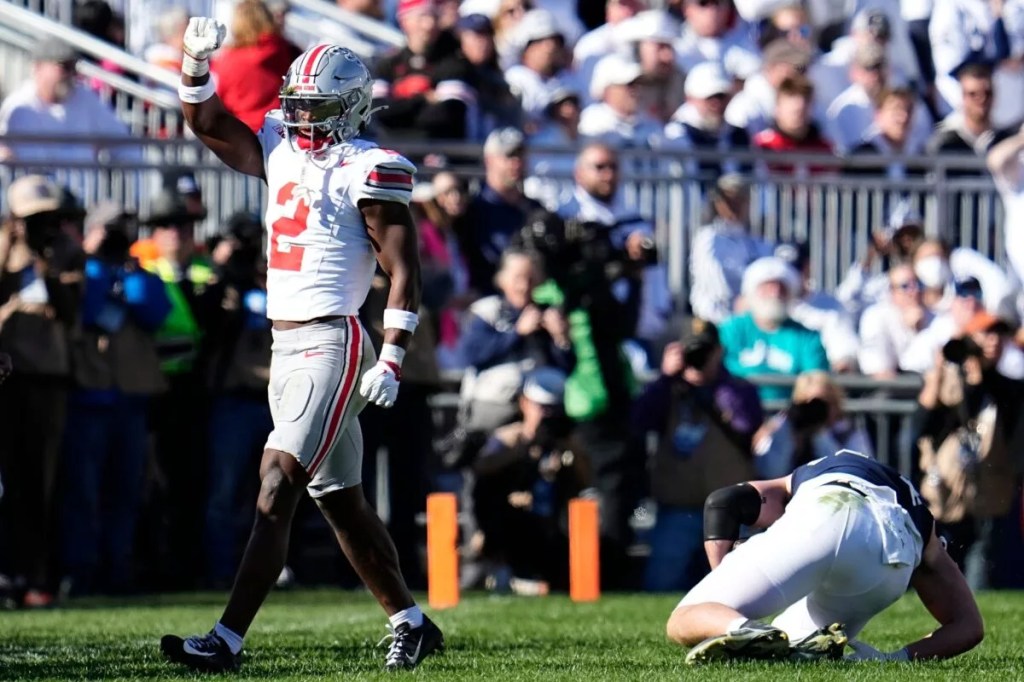
Caleb Downs is every football cliche you hear in the best way. Players like him do not come around often. He comes from a football family. His dad, Gary, played 6 years in the NFL as a RB. His brother, Josh, is a 4th year WR for the Colts. He has grown up around the game. The talent is undeniable. A 5-star recruit and #7 overall player in the 2023 recruiting class, Downs played both ways as a S/RB at Georgia Mill Creek HS. He had 19 career interceptions and ran for 20 TDs as a senior. As a senior, he was named USA Today National Defensive Player of the Year and led Mill Creek to their first and only State Title in school history. He also was a key contributor on the basketball and baseball teams there. Downs committed to Alabama, citing Nick Saban’s storied history of DBs, as a key factor. Saban almost never started true freshman due to the complexity of his defense, but Downs was different. He was starting in the secondary of the SPRING GAME. At 18 years old, he led Alabama in tackles and was arguably the best player on a defense that went to the CFP semi-finals. Even more impressively, Alabama deployed him all over: Free Safety, Strong Safety, and as a Nickel defender. Saban described him as “mature beyond his years” and his football IQ is what separates him from other top players.
When Saban retired, Downs became the #1 ranked player in the transfer portal and committed to Ohio State. He immediately became a leader and star for the Buckeyes. Helping them win a national championship and being named a unanimous 1st Team All-American. Despite playing for his 3rd different DC in 3 years, 2025 was his best year yet. Matt Patricia ran a more complex defense with disguised coverages and rotations typically only seen in the NFL. Not only did Downs pick these up easily, he played everywhere from deep safety to linebacker while routinely helping other players adjust their position pre-snap. Downs was again a unanimous 1st Team All-American, won the Thorpe Award, and was named Big 10 DPOY. Downs posted a PFF Defense Grade above 85.0 and a PFF Coverage Grade above 85.0 in all 3 years of college while playing in the two best conferences in football. His biggest strength may be as a run defender. His instincts are elite and he is fearless fitting the run, but smart to never overcommit and miss his assignment. As a Safety/Nickel, there are times when your assignment is to contain the edge and not let the run bounce outside or fill a gap and let the run spill to a LB to clean up. These plays don’t show up on a stat sheet, but Downs routinely makes them. He makes plenty of tackles too and is very reliable when it comes to bringing down ballcarriers with good technique and physicality. Despite average size, he can deliver punishment to ball carriers. He is also a maniac covering the flat and blowing up screens. He diagnoses these plays incredibly quickly, even if it was not his direct responsibility, and is able to slip by blockers or run through them while still making the tackle. Ohio State also loved deploying him in man coverage on TEs and slot WRs. His intelligence and short area quickness allowed him to stay with shiftier players, while his physicality at the catch point lets him disrupt bigger ones. In 2025, Downs’ 91.0 PFF Man Coverage Grade ranked #1 in the nation among Safeties. In 113 man coverage snaps, he allowed just 9 targets, and 5 receptions for 5 (FIVE!) yards. He had two interceptions in man coverage. In zone, Downs understands route combinations like an offensive coordinator and knows just when to peel off from a deeper zone to make a play on a pass intended for a receiver coming toward his area. He’s fantastic as a middle of the field robber. He is quick to trigger and make a beeline for the receiver before the ball even leaves the QB’s hand to break up a throw or cause a turnover. There are plenty of Safeties who can do some of these things at a high level, but what makes Caleb Downs rare is his ability to excel in all of these facets. As shown by playing for three different DCs, he is not scheme-specific. Downs can be used in a variety of ways every game and be an impact player.
At just 21 years old, Caleb Downs is a culture changer and force multiplier for a defense in Cincinnati that desperately needs it. You routinely see him pre-snap changing calls on the field, instructing teammates into position, and covering for mistakes as they happen. He has the versatility and intelligence to play either Safety position and in the slot. Al Golden’s defense at Notre Dame in 2024 asked a ton out of All-American Safety Xavier Watts. As I wrote before the Draft last year, Geno Stone did not allow Golden to do any of the things he wanted on defense. Downs, paired with new signing Bryan Cook, gives Golden the ability to do all sorts of creative things on the backend while also improving the run defense and tackling. This helps take responsibility off of the struggling young LBs in front of him. Downs has the work ethic, intelligence, and “dawg in him” to be one of the greats. This would be a slam dunk pick for the Bengals.
11. Miami Dolphins
Spencer Fano – OT, Utah
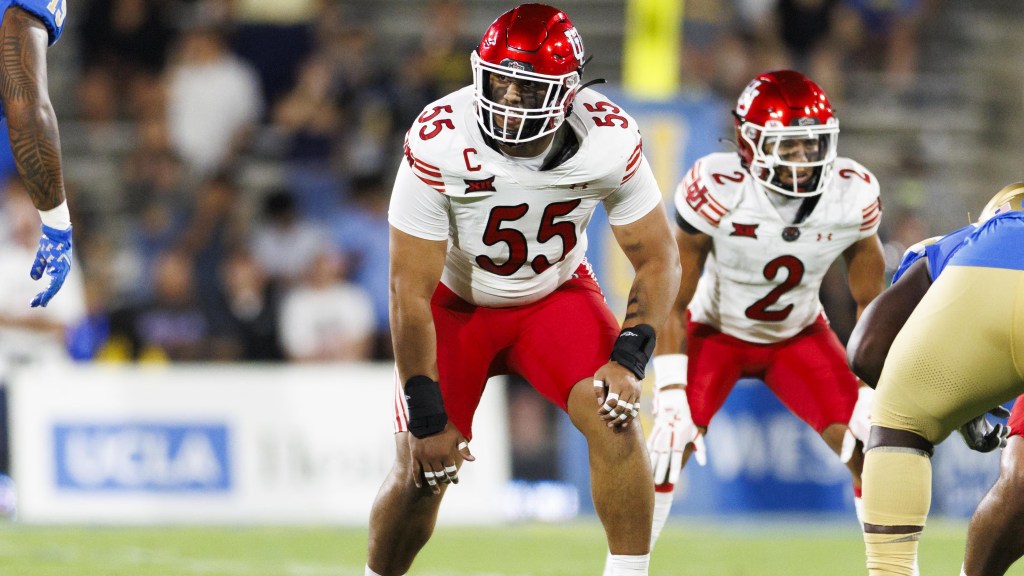
Miami has needs everywhere. With a new GM and HC, both coming from Green Bay, this roster is a blank slate. The Packers have some very particular Draft thresholds and tendencies, and I would not be surprised to see Miami adopt a lot of them moving forward. A big one: before taking Matthew Golden last year, Green Bay had not selected a Round 1 WR in 23 years. They really like to build through the trenches when possible. Another big one: they love athletic Offensive Linemen that have the versatility to play multiple positions. Whether it was 2nd Round pick Elgton Jenkins, who played every spot on the OL at some point, 1st Round pick Jordan Morgan who has played Tackle and Guard, or the player that reminds me most of Fano: RT Zach Tom. Tom was a draft crush of mine once upon a time. He was an elite athlete who had 5 position flexibility. Fano is very similar. Fano posted an elite 9.79 RAS, and scouts thought he was even more impressive in the on-field positional drills. Not many 6’5”, 311 pound men can glide as effortlessly as Fano. This shows up in the run game where Fano routinely gets to the second level and has the balance and nastiness to take out defenders. In pass protection, he has great feet to mirror rushers and good technique using his hands. The main gripe with Fano is his length and power profile. He has very short arms for an NFL OT, and also has a weak anchor against power rushers who can get into his chest. He was not often tested by great power rushers in the Big 12, but he could struggle against the Jared Verses of the world at the NFL level. Still, at just 21 years old, Fano has room to add to his frame and shore up some of the anchor issues. While he will never be the longest, adding a guy with his athleticism and consistency at the college level combined with the potential to play any of the 5 OL positions in the NFL makes it hard to imagine him ever being a bust. He would be a great fit next to freaky athletic C Aaron Brewer in a wide zone scheme in Miami.
12. Dallas Cowboys
Keldric Faulk – EDGE, Auburn
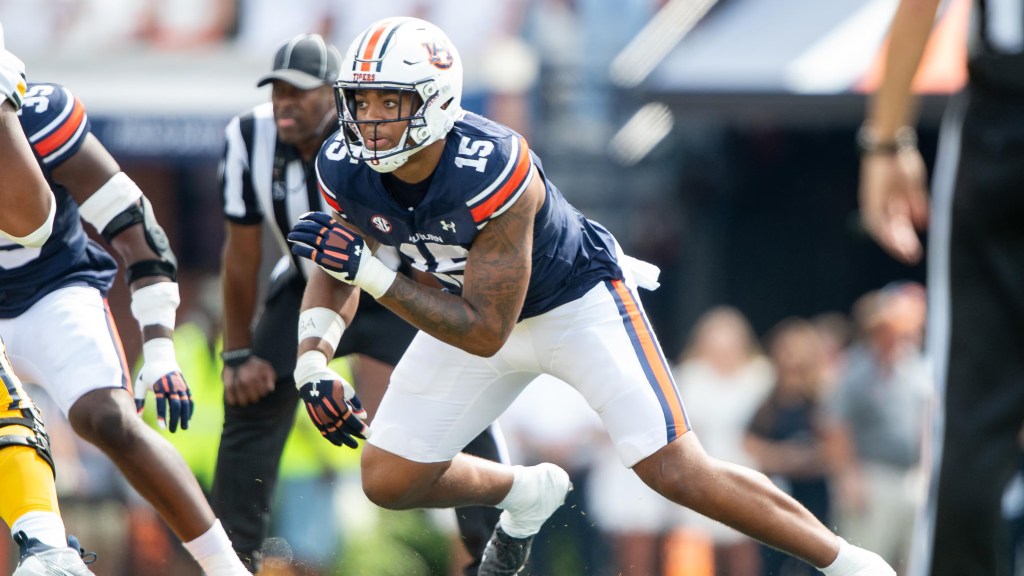
Keldric Faulk is one of the most polarizing prospects in this entire class. And by polarizing, I mean every fanbase who opens a mock draft and sees their team take Faulk is immediately enraged. For what it’s worth, I agree with those fans. However, the league appears to be higher on him than fans. Let’s start with the good. At 6’6”, 275 pounds with over 34 inch arms, Faulk has elite size for the DE position. He is also the youngest player in this entire draft class at just 20.6 years old on Draft day. People in Auburn’s program rave about his football character and leadership despite his young age. Faulk is also arguably the best run defending EDGE in the class. He has elite production as a run defender throughout his career. He has powerful hands and is great at shedding blockers and finishing plays in the run game. On the other hand, Faulk has some of the worst pass rush production in this class. He had just a 15.0% Pass Rush Win Rate on True Pass Sets and routinely disappeared as a rusher against P4 competition. Many will make the comparison to Shemar Stewart, but Stewart has rare athleticism giving him historical precedent for upside at the position. Despite Faulk’s measurements, he doesn’t possess the elite twitch or get-off that EDGEs of this prototype often possess. This limits his ceiling in my opinion. He has nice power, but is not a threat to turn the corner or bend to get by an OT. Some have suggested he will be best as a 3-Tech at the next level, but at his height, he would have to add 30+ pounds to avoid getting bullied on early downs inside. That is a lot of projection. He reminds me of Darius Robinson who was an EDGE/5-Tech tweener that the Cardinals took late Round 1 a few years ago. I think Faulk’s size and run defense give him a solid floor, but the lack of pass rush production and elite twitch athleticism limits his ceiling as a prospect. However, Jerry has continually brought up run defense when discussing his reasoning for trading away Micah Parsons and acquiring Quinnen Williams and Kenny Clark. He adds another great run defender here with Keldric Faulk.
13. Los Angeles Rams
Makai Lemon – WR, USC
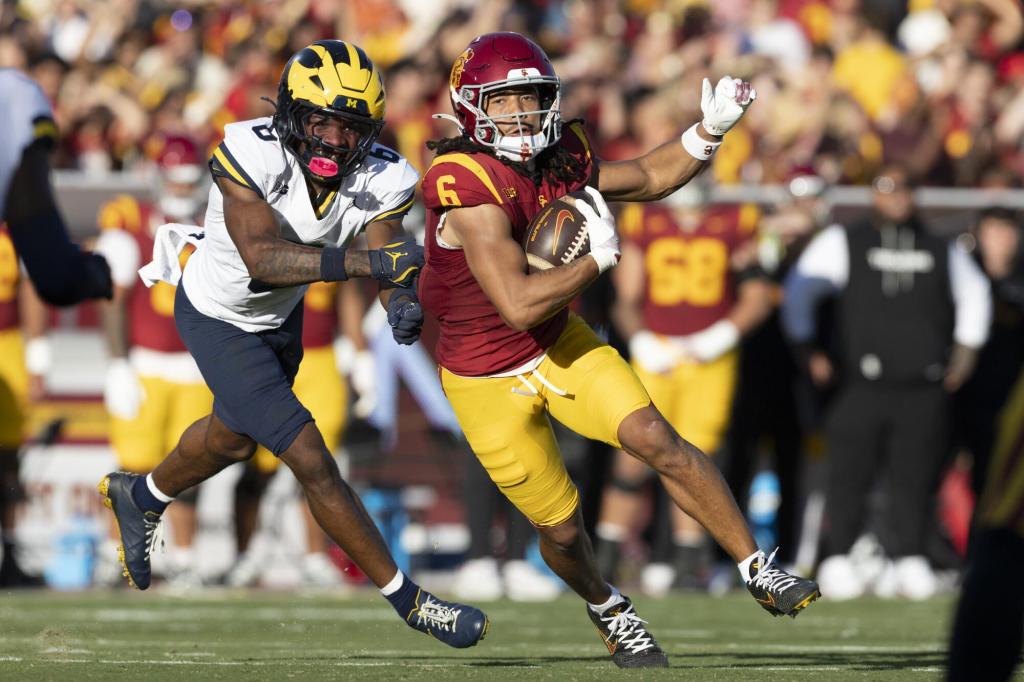
Man it must be fun to be a Rams fan, huh? Every other team is worried about filling needs in the Draft. Meanwhile, the Rams have a loaded roster that was a couple plays away from likely winning a Super Bowl last year and they added All-Pro CB Trent McDuffie to help fill their biggest weakness. Now they get to use the Falcons pick that they acquired last year. (The Falcons drafted James Pearce who is currently facing domestic violence charges and may never play the sport again.) So hey, let’s get McVay and Stafford another toy to play with! Why not? Lemon is the next in line of the new meta of NFL WRs that are impossible to cover in the slot, but can also win on the outside. The Amon-Ra St. Brown comps are obvious but fair for Lemon. No one is better at using that slot archetype than McVay who helped Cooper Kupp break every record as a primarily slot WR in 2021. Lemon posted 1,160 yards and 13 TDs on his way to the Biletnikoff Award in 2025. Similar to St. Brown and Seahawks OPOY Jaxson Smith-Njigba, Lemon has average size and just adequate speed, but his ability to get open and his hands are elite. A league that let both of those players slide too far, has surely learned from their past mistakes. If Stafford can stay healthy again, Nacua, Adams, and Lemon give the Super Bowl favorites the best group of weapons in the NFL.
14. Baltimore Ravens
Francis Mauigoa, OL, Miami
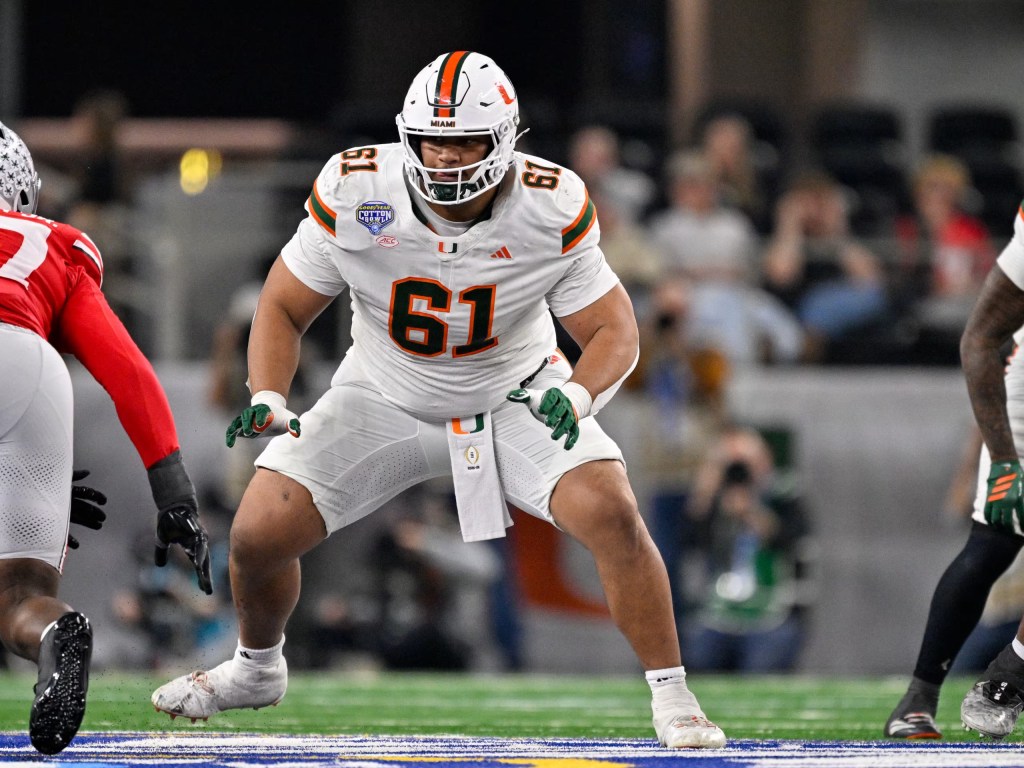
WR is a strong possibility here for Baltimore, but they have always been known as an organization who scoops up value that falls to them, no matter their needs or positional value beliefs. They do that here, scooping up Mauigoa, who could go as high as 3 to Arizona, but has a slide down the board in this scenario. Mauigoa came to Miami as a highly-touted 5 Star recruit from IMG Academy. He lived up to the hype, starting as a true freshman and being a solid RT for the Canes. He held down the right side for 3 years at Miami, having his best season as a junior on the Canes CFP Finals’ team. At 6’5.5”, 329 pounds, Mauigoa isn’t the most nimble OL, but he has good feet for his size. Where he really shines is his technique and power. Mauigoa will be just 20.8 years old on Draft Day, but with over 2,000 college snaps, he is a well-refined NFL ready Lineman. He does well to diagnose and pass off stunts. He also shows great technique with his hands to keep EDGEs guessing and has great power in his punch. Mauigoa has a very strong anchor to counter bull rushes. In the run game, he is a mauler who opens lanes and puts defenders on the ground. Miami routinely ran behind him for big gains. This was on display in the CFP upset win over Ohio State. Despite being a great OT, Mauigoa’s skillset and body type are well suited to move into Guard if needed. Baltimore struggled at Guard last year, and pairing new signing John Simpson with the rookie is a massive upgrade to the Ravens’ OL. I also believe he could potentially kick out to Left Tackle when Ronnie Stanley walks away in the near future. At the Combine, Mauigoa stressed that he is happy to play any of the 5 OL spots as long as he can get on the field to help the team win. He is a building block piece for Baltimore who needs one up front after losing Tyler Linderbaum in free agency.
15. Tampa Bay Buccaneers
Olaivega Ioane – G, Penn State
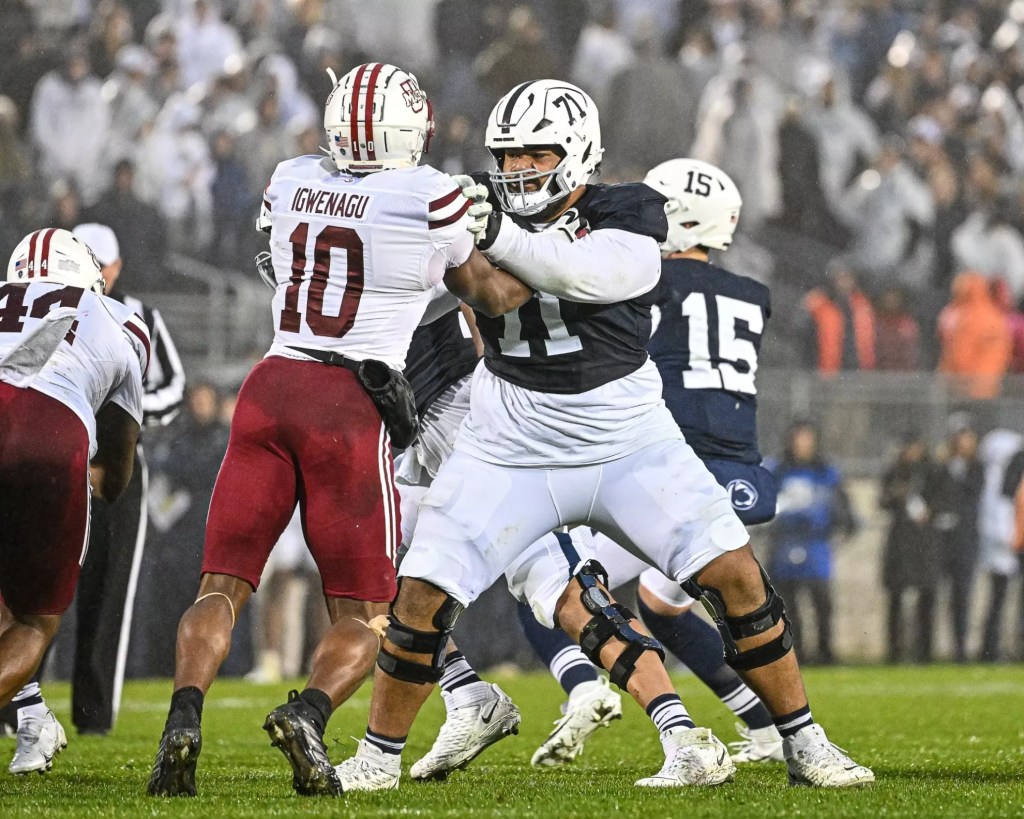
All of a sudden, the Bucs have a lot of needs to fill. GM Jason Licht has a good track record of taking BPA in the Draft, and it has worked out for him. He does that here with Vega Ioane, the unanimous top Guard in the class. He is built like a tank at 6’4”, 320 pounds. Ioane is as sturdy of a pass blocking Guard as you will find. He allowed just 4 QB hurries, 0 QB hits, and 0 QB sacks in 2025, and his 90.9 PFF Pass Blocking Grade in True Pass Sets ranked #1 in the nation among Guards. He has elite grip strength and is simply unmoved by bullrushes. He always stays square and is rarely ever off-balance. His technique and footwork is polished, even if he is not the most fleet-footed Guard. In the run game, Ioane utilizes his power to drive defenders out of the play. He has the grip strength and nastiness to sustain the block until they are terminated. There are not many negatives to his game outside of not being a great scheme fit for teams who specialize in outside zone. Tampa Bay can place him in for Ben Bredeson at his comfortable Left Guard spot right next to All-Pro LT Tristan Wirfs. Good luck to any defender lining up across from those two.
16. New York Jets
Jordyn Tyson – WR, Arizona State
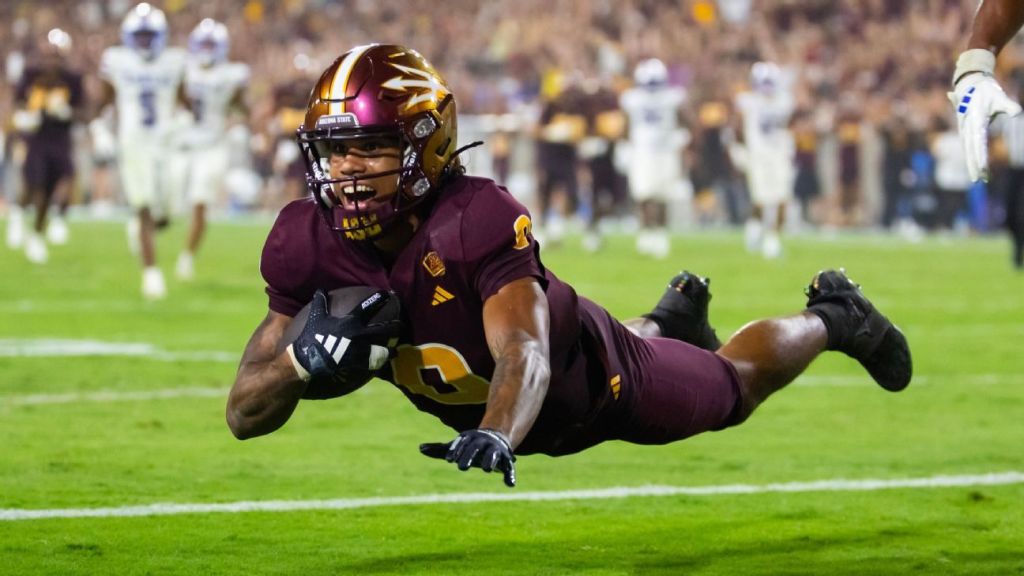
The 2026 NFL Draft is about one thing for the Jets: setting themselves up to have a successful environment to drop a QB into in 2027. They pair WR Jordan Tyson with Garrett Wilson to give their future QB a dynamic duo. When he is on the field, Tyson has a case to be the Draft’s most talented WR. He is 6’2”, 203 pounds with plus athleticism and a polished game. He has an advanced bag of releases and is a silky smooth route runner to get open at all three levels of the field. He has great body control and hands to make acrobatic catches downfield and is a good run-after-catch player. The only major flaw in his game has been durability. In 2022, he tore his ACL, MCL, and PCL in the same knee, causing him to miss most of the 2023 season. During his breakout 2024 campaign, he broke his clavicle late in the year which caused him to miss Arizona State’s CFP game. In 2025, he had lingering hamstring issues that caused him to miss games sporadically throughout the year. On one hand, these are all separate, unrelated injuries. It would be worse if it was a recurring single issue. However, Tyson did not work out at the NFL Combine, citing the hamstring. A hamstring issue for a player that hasn’t played a game in over three months? That’s concerning. Per Daniel Jeremiah, NFL teams view Tyson as one of the most polarizing prospects in the class due to the medicals. If he stays healthy, this could be a steal. The Jets opt to take the swing on an elite talent to boost a squad that had zero players over 400+ receiving yards in 2025.
17. Detroit Lions
Kadyn Proctor – OT, Alabama
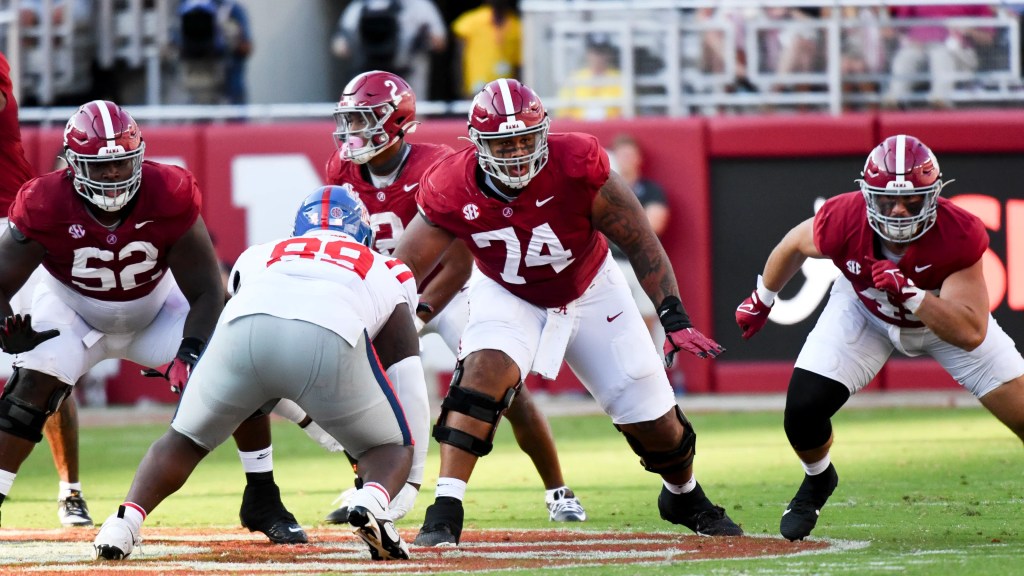
Kadyn Proctor is one of the biggest players in this Draft. The former 5 star recruit has the tools to become great but has faced inconsistencies along the way. Alabama has had a trend these last 3 Draft cycles of massive OL who, in my opinion, played at a weight 20 pounds too heavy. In 2024, it was the 7th overall pick RT JC Latham. In 2025, it was the 12th overall pick LG Tyler Booker. This year it is Kadyn Proctor, who apparently played at over 360 pounds through most of college. At the Combine he cut down to 352 pounds. I would love to see him play at 340 pounds. Any more than that just is not helpful and costs you some foot quickness. Watching Latham and Booker the last two cycles meant I saw plenty of Proctor as a freshman and sophomore. Despite the hype, I was pretty disappointed in the film heading into this year. In week 1 against Florida State, Proctor dropped another stinker – allowing 5 pressures and a sack. I was ready to write him off as overhyped again. However, the rest of the season, Proctor settled in and put together a great year. In the final 14 games after FSU, Proctor allowed just 16 pressures and one sack. He was one of the only OTs with an 80+ PFF Grade in both Run Blocking and Pass Blocking. At the Combine, he showed some special athleticism for his size including a 32.5 inch vertical jump at 352 pounds. The explosiveness and power is a rare combo. While not a fit for every scheme, Proctor is one of the most powerful run blockers you will see at the college level. In pass pro, he has great grip strength and shows a good ability to explode backward and get depth in the pocket. However, if an EDGE gets him off-balance with a move, he struggles with a lack of agility to recover. Still just 20 years old, if he plays at a good weight, and the right OL Coach helps use him to his strengths, Proctor’s upside is as high as any OT in this class. After losing Taylor Decker, Detroit finds their Left Tackle of the future. Proctor forms a mauling power run duo with he and Sewell on the bookends.
18. Minnesota Vikings
Dillon Thieneman – S, Oregon
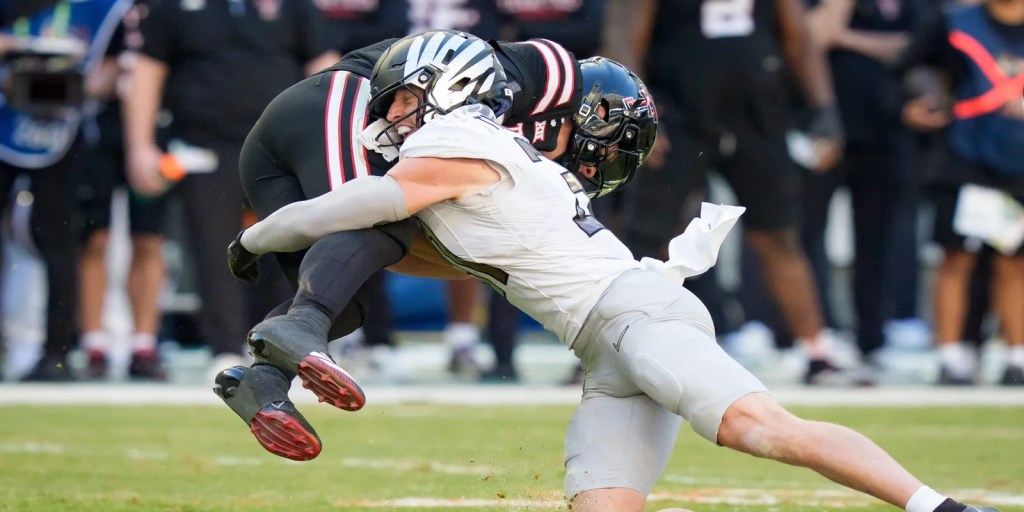
Dillon Thieneman is one of my favorite players in this class, and his versatility is a perfect fit with defensive mastermind Brian Flores if he makes it to pick 18. Only 21.6 years old on Draft Day, Thieneman has been an impact player all three years of college in a variety of roles. He burst onto the scene as a true freshman at Purdue playing as a rangy single-high Free Safety for the Boilermakers. He combines great instincts with elite athleticism which helped him produce 6 interceptions as a freshman. He transferred to Oregon before this season and played a different role in Dan Lanning’s 3 Safety defensive scheme. He spent a lot of time in the box playing a hybrid Strong Safety/Middle Linebacker role while also spending time in the slot. Thieneman showed the tackling and coverage instincts necessary to be featured closer to the line of scrimmage. His 89.7 PFF Zone Coverage Grade ranked 3rd in the country among Safeties. Thieneman blew up the Combine with a 41 inch vertical (94th percentile) and a 4.35 40 yard dash (97th percentile). He has as complete of a Draft profile as anyone in this class. 21 years old, 9.70 RAS, played over 2400 snaps in college, elite production, and has excelled in multiple defensive schemes. He checks every box, making it hard to envision him not becoming a high level NFL player.
19. Carolina Panthers
Kenyon Sadiq – TE, Oregon
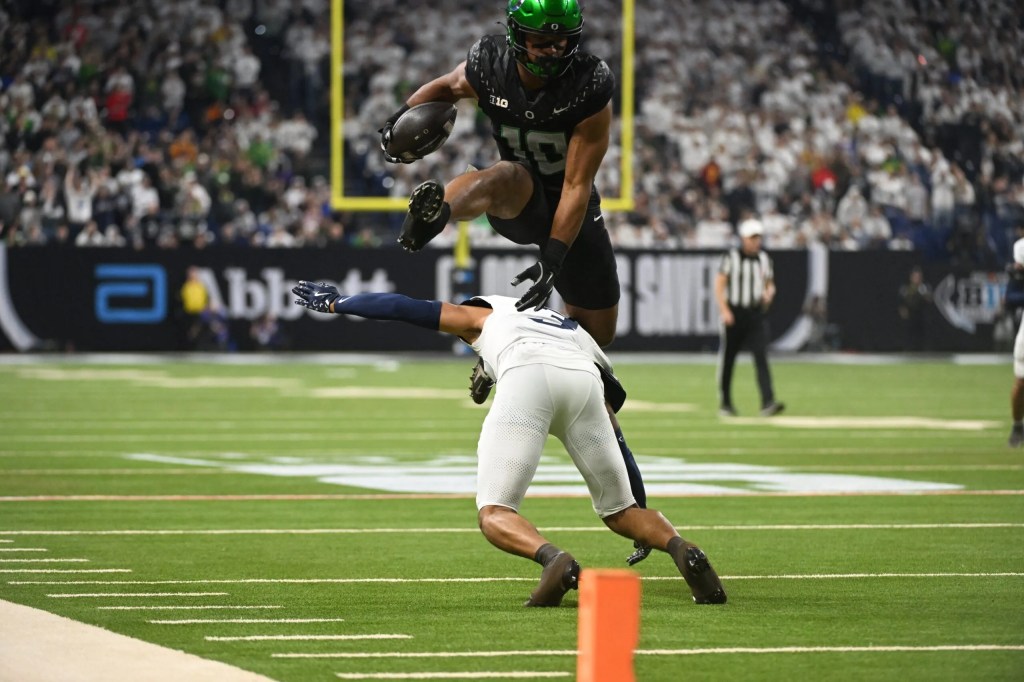
After adding ROTY Tetairoa McMillan last year en route to an NFC South division title, Carolina gives Bryce Young another weapon here with freakish TE Kenyon Sadiq. Sadiq is one of the more interesting profiles in this class. The Vernon Davis comparisons are obvious when you look at him. He is chiseled like he is made out of granite. The speed and explosiveness is unmatched at the position. His 4.39 40 time (99th percentile) is second all-time only to Vernon Davis’ 4.38 time. He also had a 43.5 inch vertical jump (99th percentile) and an 11’2” broad jump (98th percentile). The speed and explosiveness shows up on the field where Sadiq is a seam stretcher and can go up and get the ball in downfield contested situations. In the run game, Sadiq is a high effort blocker and is a weapon as a move blocker. He has the blocking chops to survive in-line, but is not at the level of top in-line TEs. He spent ample time in the slot as well at Oregon. Overall, the run blocking is a plus. However, there are negatives in the profile as well. He is undersized for the position: 6’2.5” (14th percentile), 241 pounds (9th percentile), 31.5 inch arms (7th percentile). This does show up when trying to block bigger players in-line. If you want your TE1 to be a point of attack blocker in the run game, Sadiq is not a fit for you. The production profile is solid but not at the level typically seen for a first round TE. In 2024, Sadiq as a sophomore was TE2 behind Rams’ 2nd round pick Terrence Ferguson. This past year he finally became a focal point of the Oregon offense and posted 560 yards and 8 TDs. His 891 career receiving yards are not bad for a college TE, but is a far cry from the usual elite 1st round TE prospects (Bowers, Warren, Loveland, etc.). He added some weight in 2025, but it may have cost him some wiggle after the catch. Sadiq will be polarizing between teams in this Draft. It would not shock me if some teams have him as a top 10 player, but he could also slide to the end of Round 1. Personally, I see him as a fringe Round 1 player, but the freakish upside is tantalizing. Carolina takes a swing to add a dynamic weapon to their offense.
20. Dallas Cowboys
Jermod McCoy – CB, Tennessee
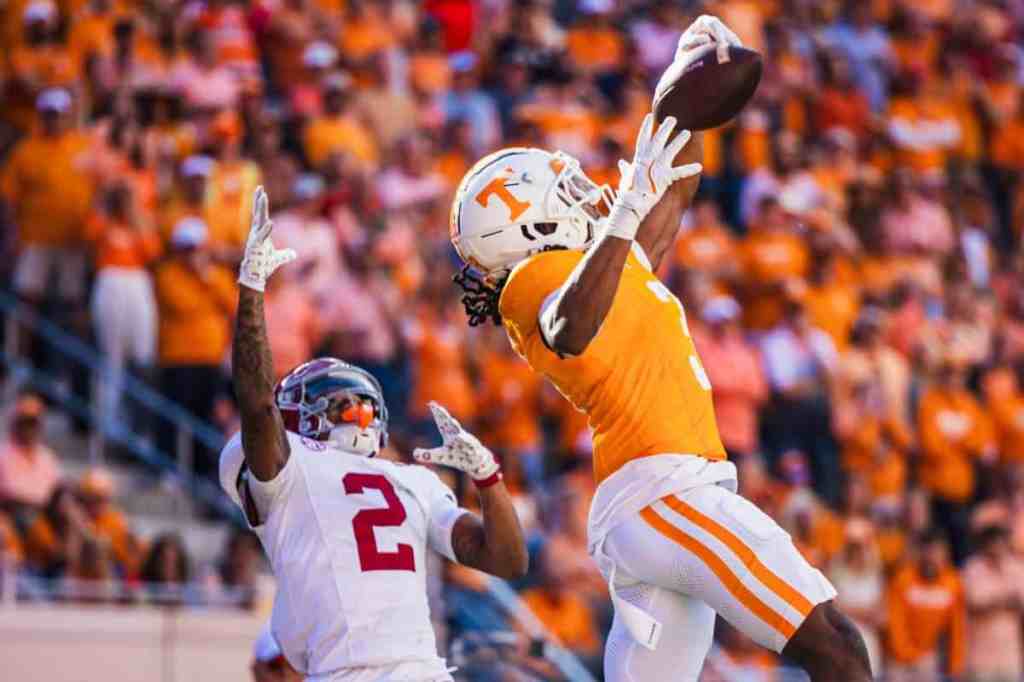
After adding Keldric Faulk to the DL, Dallas grabs a potential CB1 in Jermod McCoy with their second pick of Round 1. McCoy is another player who will have some mixed opinions around the league due to missing all of 2025 with a torn ACL. Now 13 months off the ACL tear, McCoy has a big day coming up this week where he will run and go through drills for NFL teams. As long as he looks back to normal athletically, he should cement a spot as a top 20 pick. McCoy’s 2024 film rivals anyone at the position, and he would be ranked 1A/1B alongside Mansoor Delane if health was a confirmed non-issue. He is a good-sized pure outside CB with twitchy movement skills. McCoy has the long speed to match vertical routes downfield, even from press-man. His change of direction and acceleration to break on a ball in the air is elite. The short area quickness and explosiveness plus great ball skills at the catch point lead to plenty of INTs and PBUs. McCoy plays with a feistiness and is a plus in the run game where he will consistently stick his nose in to make tackles. There is risk in McCoy’s profile: only one year of production (albeit as a 19 year old in the SEC), injury question marks, and sometimes struggling to track the ball and get his head around in time leading to getting dunked on or drawing a flag. However, if the medicals check out, McCoy is a fringe top 10 player in this class and has true CB1 potential. Just 20.7 years old on Draft Day, Dallas replaces Trevon Diggs with one of the top Corners in the class.
21. Pittsburgh Steelers
Caleb Lomu – OT, Utah
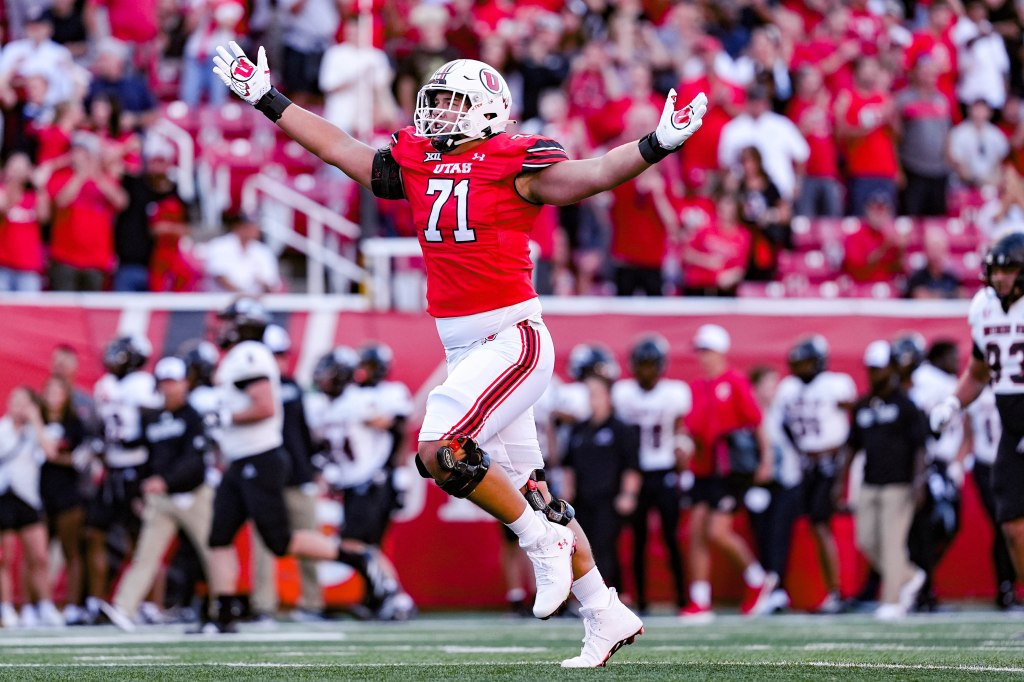
Pittsburgh took Georgia LT Broderick Jones 14th overall in the 2023 Draft, who was seen as a raw upside player at the position. Heading into year 4, Jones has struggled to find his footing. Adding to that, Jones suffered a season-ending neck injury that could affect his availability in 2026. Whether the Steelers are starting Aaron Rodgers or a young QB like Will Howard, finding a franchise Left Tackle is a priority. They fill that void here with Utah LT Caleb Lomu. Just 21.7 years old on Draft Day, Lomu is young with tons of potential, but he is already a polished pass protector. He is an athletic big man with good footwork and range. He has very good technique with his hands to keep EDGEs guessing. In 359 pass blocking snaps in 2025, Lomu allowed just 8 pressures and zero sacks. Although it should be said, his one poor performance of the year came against bendy day 2 NFL prospect Romello Height of Texas Tech. In the run game, he uses his athleticism to climb and block at the second level. He lacks a ton of pop in his hands in both phases. He is not the nasty mauler that some of the other top OTs are in this class, but if you want a smooth pass protector on the blindside, Lomu is a great option. Pittsburgh pairs Lomu with Troy Fautanu as their bookends for the foreseeable future.
22. Los Angeles Chargers
Akheem Mesidor – EDGE, Miami
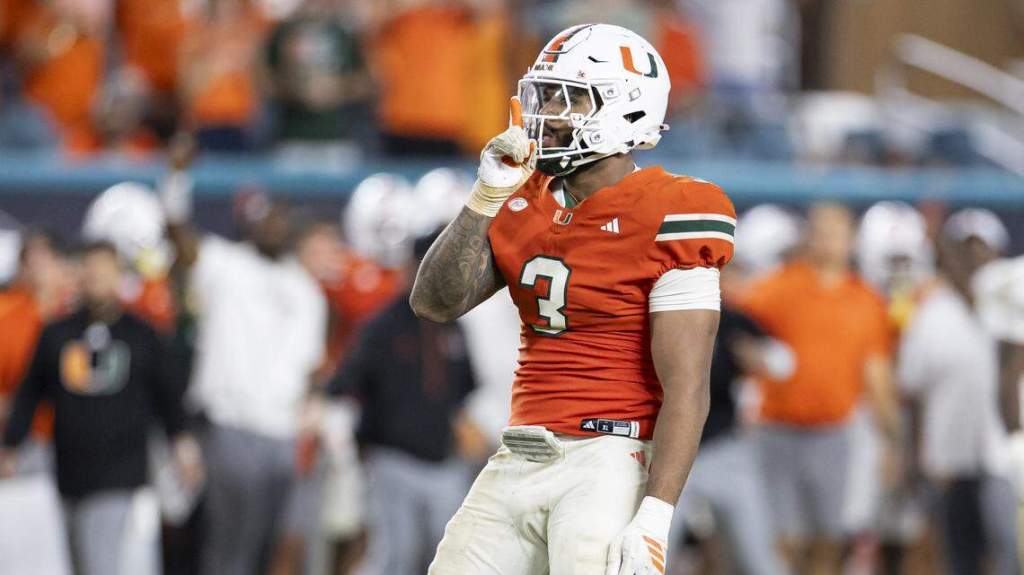
After losing Odafe Oweh to free agency, the Chargers target Mesidor to add a third EDGE to the room alongside Mack and Tuipulotu. Mesidor is one of the most unique profiles in this class, and it seems like the NFL is significantly higher on him than I am. Let’s start with the good. If you watched Miami last year, Mesidor had plenty of moments jump off the screen. He had 67 pressures, 13 sacks, and a 20.8% PRWR in 2025. In the run game, he is great at diagnosing plays and, similar to Bain, has a relentless motor to track down ballcarriers. As a pass rusher he uses good technique and a large bag of moves to beat the guy in front of him and did it effectively at the college level. Most of my questions come from how he will translate to the NFL level. Mesidor is the third oldest prospect in the class. He will be 25.1 years old on Draft Day. Many question why this matters and say they are not worried about his second contract. That is not the point. The real concern is his best college season, by far, came as a 24.5 year old beating up on 19 and 20 year old Offensive Linemen. You don’t get to play those guys in the NFL as a fully developed player. Mesidor is a pretty average athlete for NFL standards, he won’t be dominant in that aspect. He lacks the ability to win with power even at the college level. His bullrush rarely worked and the majority of his wins at EDGE came from inside moves, which is useful, but you often do not have the freedom to go rogue in the NFL. You have to contain the outside lane with more athletic QBs across the league. Usually only the elite EDGE1’s get that kind of freedom, the rest of the DL must play their role. A lot of Mesidor’s production came from putting him over the opposing team’s weakest Guard and letting him exploit their lack of athleticism. At 6’3”, 259, he can’t often survive inside relying on being quicker than plodding Guards at the NFL level. He does not have the bend or speed to threaten legit OTs around the arc. Mesidor also has dealt with a handful of injuries before this past season, so teams will have to make sure he checks out medically. He is a very fun, high energy player, and I get why some teams are high on him, but there are far too many red flags when it comes to Mesidor at the NFL level for me to even consider him in Round 1. However, I can see Jim Harbaugh loving his motor and flashes in the biggest games enough to pull the trigger on him here. If a DC finds a way to use Mesidor to his strengths, he can be a plus player in the NFL.
23. Philadelphia Eagles
Denzel Boston – WR, Washington
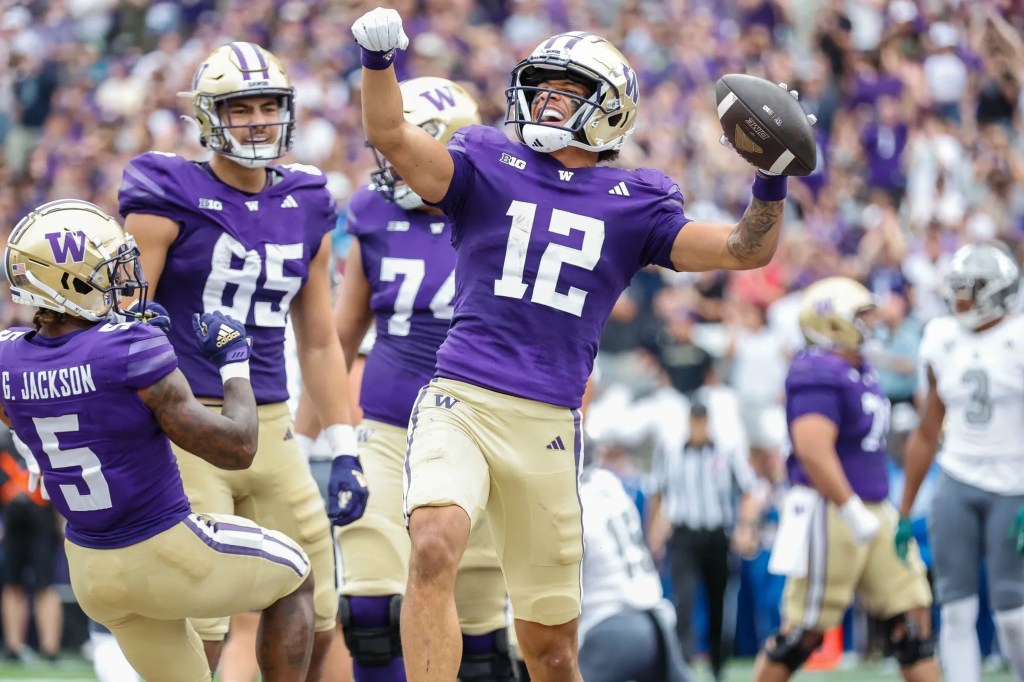
It is no secret that AJ Brown is unhappy in Philly and is a potential trade candidate after June 1st. With the Eagles having plenty of big paydays coming up on defense from draft hits, they look to get cheaper on offense by pouring early picks in on that side. They find their AJ Brown replacement in Washington WR Denzel Boston. Standing at over 6’3.5” and 212 pounds, Boston is a large WR with some of the best hands in the class. He has great body control and a large catch radius which allows him to excel on jump balls (he caught 10 of 13 contested catches in 2025). He also has sure hands in other areas with just a 3.6% drop rate for his career. When I first was made familiar with Boston, I assumed he would just be a classic big WR. I was surprised when I turned on the tape and saw how well he moved for a tall WR. He obviously is not some twitched up short area quickness, gadget guy, but Boston can move. He can get off the line and stack CBs on vertical routes. He is not an elite route runner, but he can snap routes off and is good at finding pockets in the zone. He can grow technically in his release packages and needs to fine tuning certain routes, but he is pretty good in that area. Like most big WRs, Boston is pretty average after the catch. I came away a lot more impressed than I expected with Denzel Boston. There are shades of Michael Pittman and Drake London to his game. He is a very different WR than the YAC monster that AJ Brown is, but adding Boston alongside Devonta Smith gives the Eagles a formidable passing attack.
24. Cleveland Browns
Omar Cooper Jr. – WR, Indiana
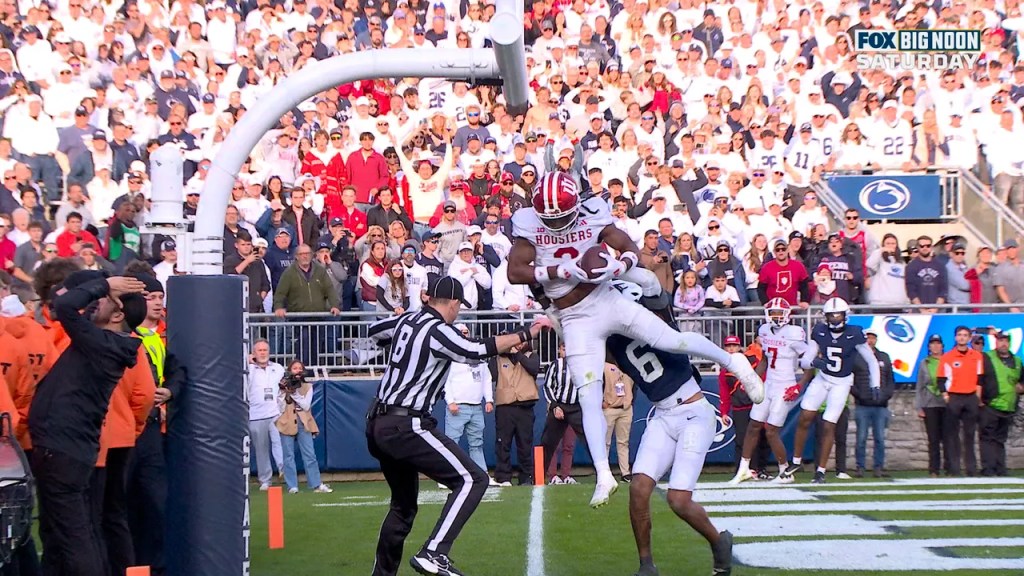
It is no secret that Cleveland desperately needs to add talent to the WR room. They do that here with Indiana WR Omar Cooper Jr., who has continued to rise up draft boards over the last month. He tallied 937 yards and 13 TDs for the Hoosiers in 2025. Cooper is everything you look for in a slot receiver in an era where slot WRs have taken over the NFL. The 6’0”, 199 pound Cooper confirmed his juice at the Combine with a 4.42 40 time. His best trait is his shiftiness. It shows up as a route runner where Cooper routinely gets open against man coverage. His best trait is his YAC ability. He has the elusiveness and acceleration to make tacklers miss and create explosive plays in the passing game. His 27 missed tackles forced in 2025 is first among WRs in this class. His body control in the air is as elite as it gets (just watch his game winning TD catch against Penn State for proof). The main knock on Cooper is his mediocre play strength. This pops up against more physical cornerbacks, both when facing press coverage and when hand fighting as a route runner. This is the biggest reason why Cooper should play mainly in the slot, despite experience doing both. Despite the lack of size and strength, Cooper is a plus as a run blocker. He shows the willingness to do it and good technique to execute. In today’s league, especially in McVay and Shanahan offenses, having a slot WR who can block is crucial (see Robert Woods, Puka Nacua, Jauan Jennings). Cooper has the ideal skillset to be a productive slot WR for the next decade in the NFL. He can step in as Cleveland’s top WR in year 1.
25. Chicago Bears
TJ Parker – EDGE, Clemson
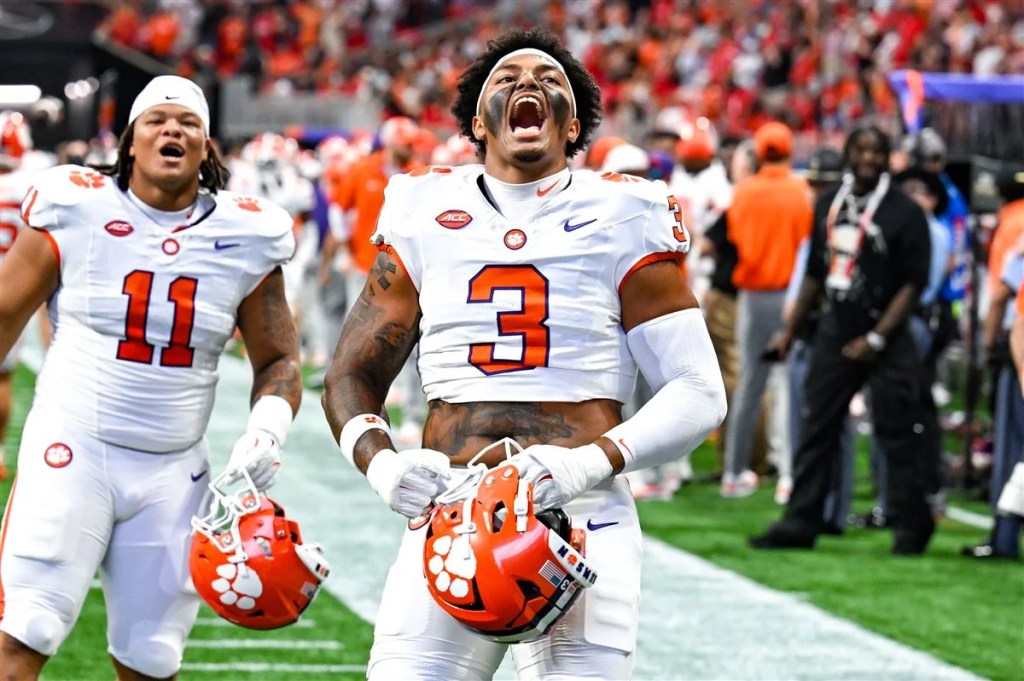
The Bears’ biggest need last year was a lack of difference makers in their front 4. With only depth signings at DT in free agency, and DE Dayo Odeyingbo coming off torn achilles, the D-Line remains a major need. If there is one thing I know about Bears DC Dennis Allen, it is that he loves big, powerful DEs. TJ Parker fits that mold to a tee. The 6’3.5”, 263 pound Parker is not an agile, bendy EDGE that is gonna be flashy. He is a throwback. Parker is a big, strong three-down player who will play in the league for a decade. Unlike some of the DPRs (Designated Pass Rushers) in this class, Parker can set the edge and anchor in the run game. He also excels at shedding blocks and making the play. His 8.4% Run Stop Percentage is in the 82nd percentile for EDGEs. As a pass rusher, Parker is the opposite of a finesse rusher. He spams the long arm, using it more than any other move, and it is effective. He wants to get into an OT’s chest and run through them. When it isn’t a long arm, it is often a bullrush. He uses the threat of power to occasionally set up an inside move or a crosschop. He lacks the athleticism, burst, and bend to ever really win the outside corner against a decent OT. As we have seen with recent Round 1 DEs like Jared Verse (who I do think has a little more burst, but still), you do not necessarily need a large bag of pass rush moves to get pressure at the next level if you have legit power. If Parker can develop one consistent counter to pair with his long arm and bullrush, he can be a very good pass rusher at the next level. Parker has a good production profile, despite a bit of a down year in 2025 (along with the rest of the Clemson defense). Many saw him as a top 10 pick before the year following a 19.5 TFL, 11.0 sack, 6 forced fumble season in 2024. At just 21.6 years old on Draft Day, there is still room to grow for Parker as a player. While he will likely never be an elite pass rusher, this is a profile I’d bet on in mid-late Round 1. It’s hard to imagine Parker not becoming a long-term starting DE who can play against the run and pass at an above average to good level. The Bears pair him with fellow three-down DE Montez Sweat and instantly become more formidable stopping the run and pressuring the QB.
26. Buffalo Bills
Malachi Lawrence – EDGE, UCF
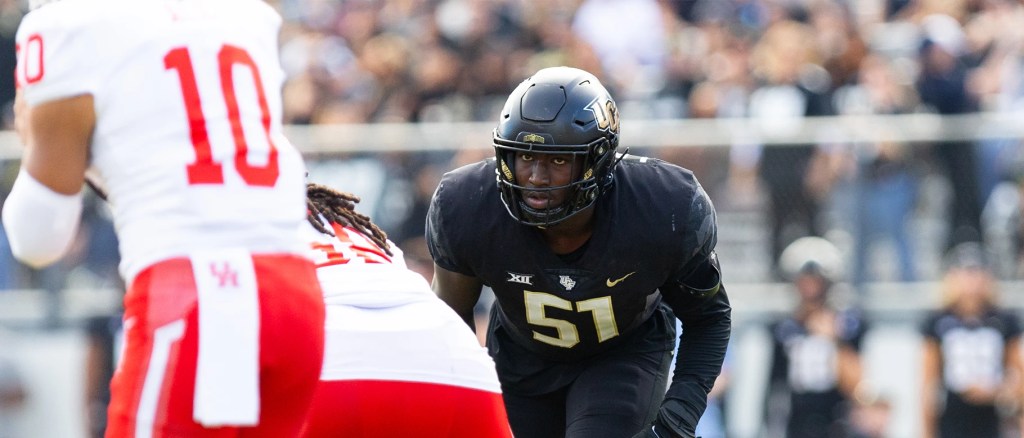
The Bills have been lacking pass rush juice opposite of Greg Rousseau for awhile, and with the corpse of Bradley Chubb slated to start there this year, it may be a bigger need than ever. Malachi Lawrence is a name you may not have seen in any Round 1 mock drafts thus far, but I think he is a darkhorse to go in the 20s. He has good size at 6’4”, 253 pounds with over 33.5 inch arms. What separates him from most bigger EDGEs is his elite burst and explosiveness. He backed up the tape with an incredible Combine including a 40 inch vertical (96th percentile), 10’1” broad jump (97th), 4.52 40 time (95th), and 1.59 10 yard split (87th). This athleticism shows up in his explosive first step off the line of scrimmage that allows him to challenge OTs with speed. From there, Lawrence has a deep bag of moves that most college players cannot fathom. He uses a mix of cross-chops, swipes, and rips while mixing in the occasional power move. He does a good job to keep OTs guessing by mixing up his sequences as a rusher. He shows the speed combined with a high motor as a pursuit player chasing QBs. His power is average, but good enough to hold up as an edge setter in the run game. He has other lapses as a run defender including gap discipline, vision, and play recognition that may limit his viability on early downs year 1. However, with his size and skillset, it is possible to become a solid run defender with some coaching and technique improvements. It is easy to envision Lawrence becoming a good pass rusher early on in his NFL career. Unlike some of the other fringe Round 1 pass rushers, like Cashius Howell, Lawrence also possesses the size and length to potentially grow into a three-down player in the NFL. I think that will move him into this range ahead of some of the other options. The Bills could use his pass rushing prowess immediately as they hope to have enough on defense to contend in a wide open AFC.
27. San Francisco 49ers
Emmanuel McNeil-Warren – S, Toledo
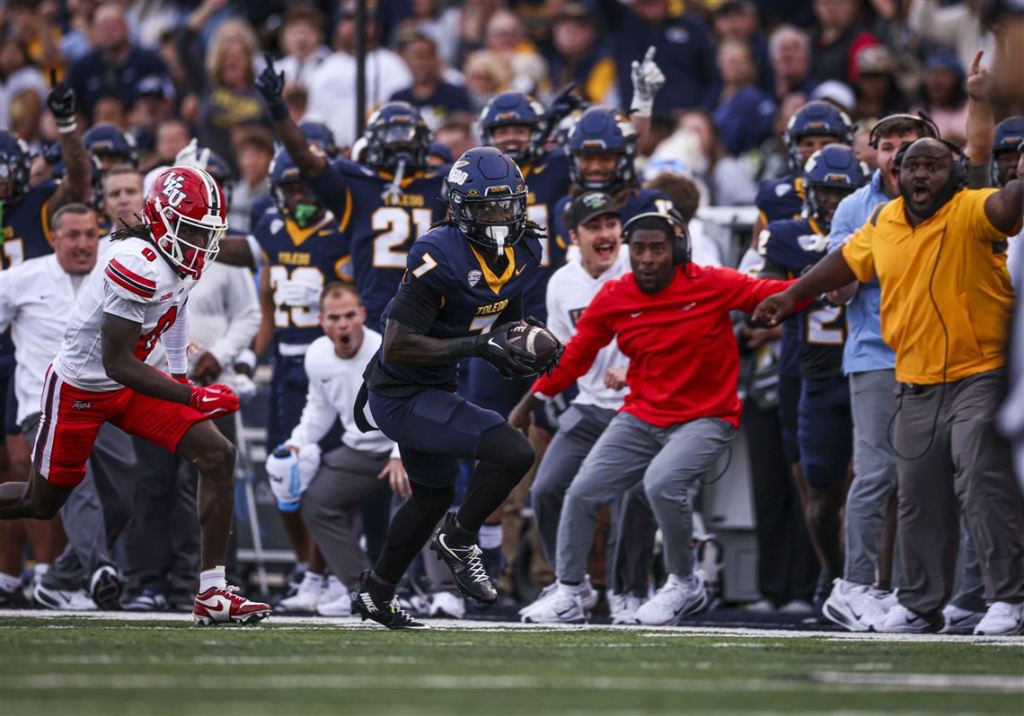
The 49ers are ready to compete for a Super Bowl, but still lack some high-end talent in the secondary. They add the lanky box Safety Emmanuel McNeil-Warren to a young DB room at pick 27. The 6’3.5”, 203 pound McNeil-Warren has long arms and 4.52 speed with good instincts. He was a three year starter at Toledo and graded above an 83.0 PFF Grade all three seasons, with 2025 being his best. He is at his best as a box Safety where he can get downhill in the run game and be a robber in zone coverage. He led all Safeties in 2025 in PFF Zone Defense Grade with a 92.5 rating. In 209 zone coverage snaps, McNeil-Warren was targeted only 11 times, allowing 4 receptions for 44 yards. He had 3 PBUs and 2 interceptions on those targets. He allowed a Passer Rating of just 9.5 in his 209 zone coverage snaps. For reference on how incredible a 9.5 Passer Rating allowed is, in Nathan Peterman’s infamous 2017 game where he went 6-16 for 66 yards with 0 TDs and 5 interceptions, he had a 17.9 Passer Rating. McNeil-Warren uses his length to disrupt plays at the catch point. He is also fearless as a Robber, laying WRs out over the middle and making them question their desire to run those routes for the rest of the game. McNeil-Warren is active punching, stripping, and jarring the ball loose, causing 11 career forced fumbles (most among DBs in this class). He is good at defending TEs in man coverage. His size does have some drawbacks. McNeil-Warren can be a bit clunky in man coverage against shiftier players and he does not quite have the sideline-to-sideline range to cover the whole field as a single high Safety. However, if a good DC uses EMW to his strengths, he can be a great player in the league. Play him in two high with the ability to drop into the box and defend the run, while being an enforcer and ballhawk as a robber and in shallow zones, and watch him excel. He can be a true playmaker in a 49ers secondary that could really use one.
28. Houston Texans
Peter Woods – DT, Clemson
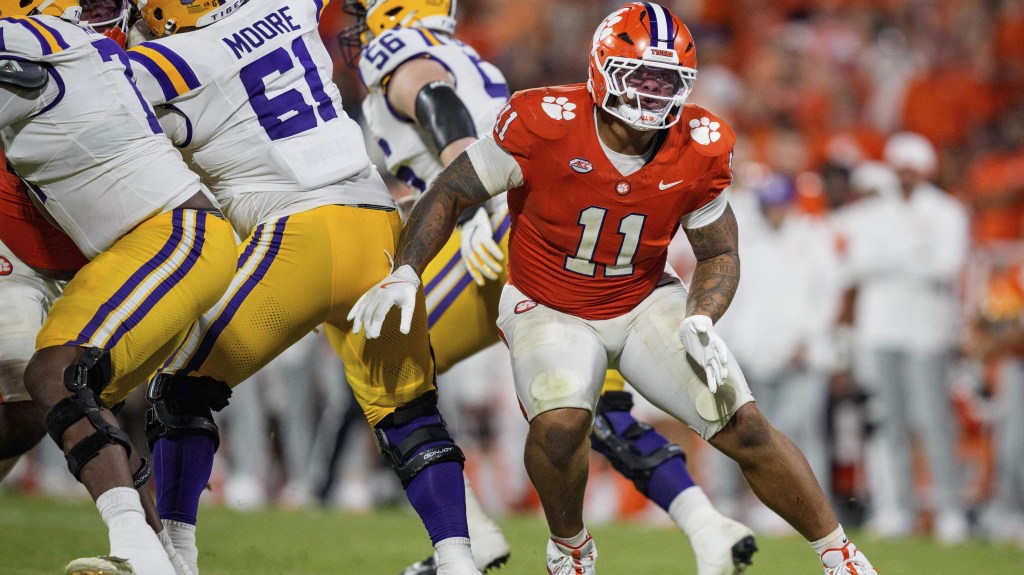
Add Peter Woods to the list of polarizing prospects in this class. Some teams will have him as a top 15 player while others will see him as a 2nd Round pick. It will not surprise me if he goes in either range. In this scenario, he ends up in Houston where he is a perfect fit in Demeco Ryans’ attacking style D-Line playing between the best EDGE duo in the NFL. Woods burst onto the national scene as a true freshman at Clemson, posting an 87.6 PFF Defense Grade with an elite 88.6 Run Defense Grade as an 18 year old in the ACC. His best trait is his violent block shedding to get into the backfield and create chaos. The raw production has always lagged behind Woods’ on-field impact, but the advanced metrics like him in important areas. His Pass Rush Win Rate in True Pass Sets is 21.2% for his career which is 97th percentile among DTs per Gridiron Grading. His run stop rate is 11.3% which is 95th percentile per Gridiron Grading. These are two of the stickiest, most important stats when it comes to projecting DTs from college to the NFL. However, his sack rate and missed tackle rate don’t stack up to typical Round 1 DT prospects. To add to the rollercoaster profile, Woods is undersized with short arms, and he tested like an average athlete rather than the elite athlete that many hoped for. All these factors make him one of the more difficult prospects to place in this class. With his good film, pass rush juice, and run stopping ability, I still believe he should be a Round 1 selection, even if he does not go as high as people once expected. He is a perfect fit as a DT in the Texans’ attacking style front where he can use his juice to penetrate and create chaos in the backfield. This would be a perfect match for both parties.
29. Kansas City Chiefs
Avieon Terrell – CB, Clemson
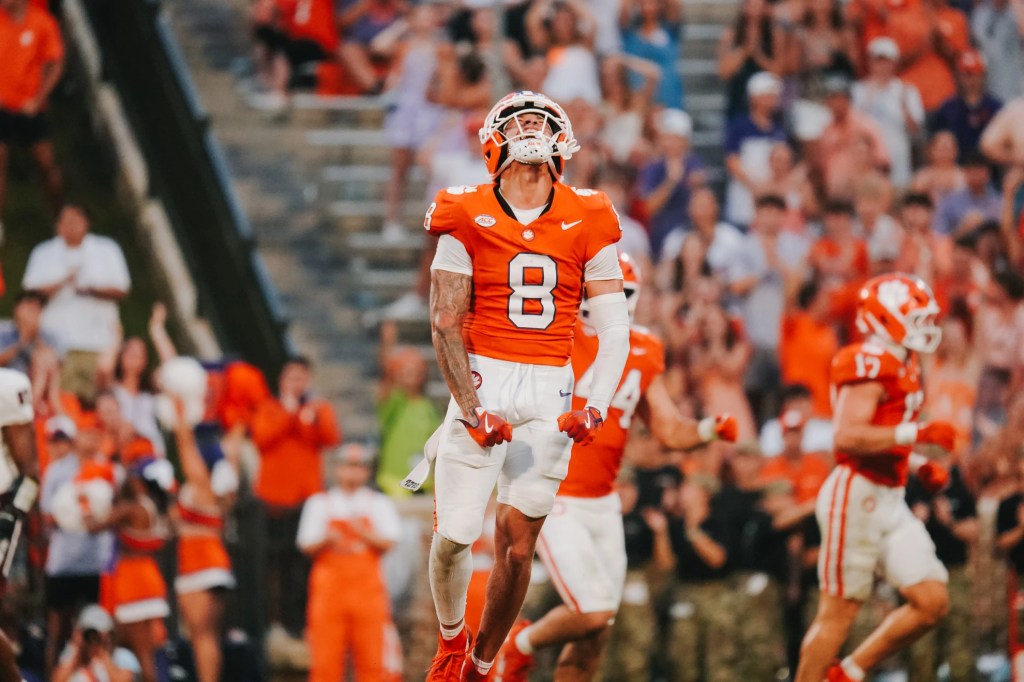
This would be a perfect Round 1 for the Chiefs. Bain falls in their lap at pick 9, and now they see Avieon Terrell make it to their second pick of the first round. After trading Trent McDuffie and losing Jaylen Watson, both to the Rams this offseason, Corner became a big need for KC. Similar to Trent McDuffie, Avieon Terrell possesses a skillset that allows him to play outside and in the slot. The 5′ 10¾”, 186 pound Avieon is not quite as big as his older brother AJ, but is very similarly sized to McDuffie. Terrell shows great speed and change of direction to mirror WRs in man coverage. His footwork looks like someone who has worked with an NFL veteran older brother. Despite his size, Terrell is fearless and effective as a run defender. His 81.5 career PFF Run Defense Grade is among the best in the class for CBs, and he has mastered the “Peanut Punch” with 8 forced fumbles in the last two seasons. He is good at evading blockers on the perimeter, although he can get swallowed up if he gets caught on a block. His lack of size and strength does show up in certain areas. He struggles to handle bigger WRs in press on the outside and can get bullied at the top of routes due to a lack of strength. There are times when his lack of size prevents him from making plays at the catch point. You’d like it if he had more ball production for a top CB. Terrell has just 3 interceptions in 3 years of heavy snaps. Just 21.3 years old on Draft Day, Terrell is a versatile DB with a lot of potential. His ability to play inside and out in any coverage scheme along with an ability to defend the run makes him easier to project to the next level than most CBs. His unique similarities to Trent McDuffie make him an easy fit to Kansas City, who has done a better job than any team at developing CBs in the last decade.
30. Miami Dolphins
Chris Johnson – CB, San Diego State
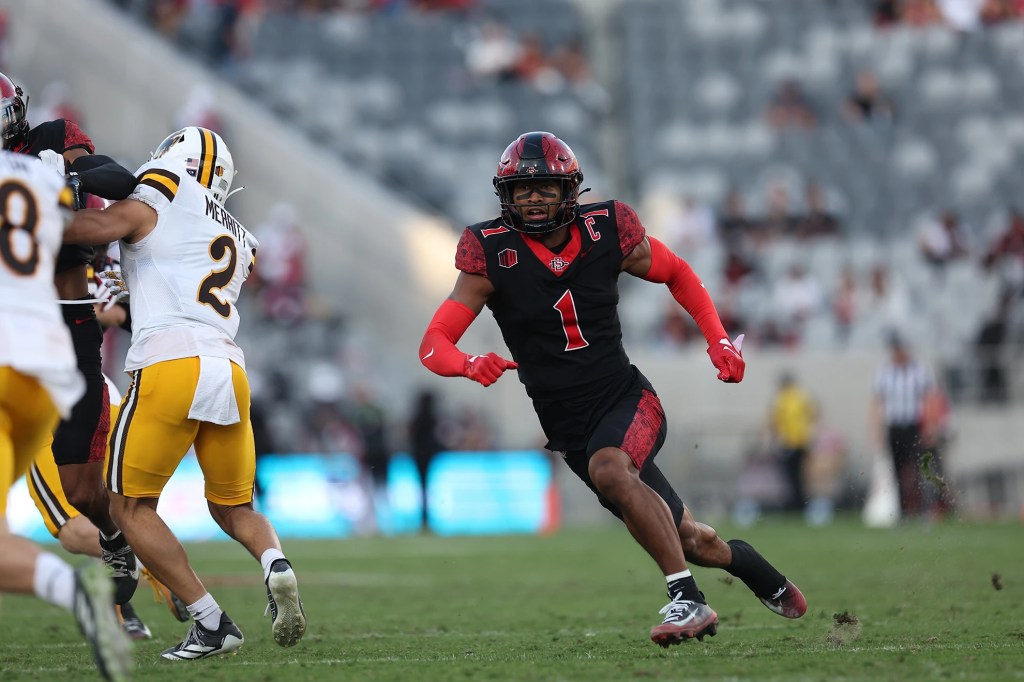
Wide Receiver is in play for Miami here if the right one is available, but there is no need for a team this noncompetitive to reach if not. Instead they go for San Diego State CB Chris Johnson at pick. Johnson is another player who is not typically seen in Round 1 mocks, likely because he played at a G5 school, but I think there is a solid chance he sneaks into the backend of Day 1 when it is all said and done. Johnson has solid size at 6’0”, 193 pounds with easy 4.40 speed. He is one of the best in the class when it comes to mirroring WRs in man coverage. He spent most of his time in college playing off-man and zone coverage. In 2025, he had a 91.9 PFF Zone Coverage Grade which ranked first among all CBs. In 233 zone coverage snaps, Johnson allowed 22 targets, 10 receptions, 107 yards and zero TDs. He tallied 2 PBUs and 4 INTs in zone. He reminds me a lot of Bengals CB1 DJ Turner, who had a breakout year in 2025, with the way he moves in coverage. Johnson is a good run defender and great tackler. His 5.4% missed tackle rate is pretty much unheard of at the CB position. He could stand to get stronger at the top of routes and can clean up some press technique, but Johnson is about as clean of a CB profile as you can get for a G5 player. To top it off, he is also an elite gunner on special teams, which probably explains the great tackling ability. Whoever ends up with Chris Johnson in April may have a steal on their hands. Miami is happy to scoop up a real CB that they desperately need.
31. New England Patriots
Max Iheanachor – OT, Arizona State
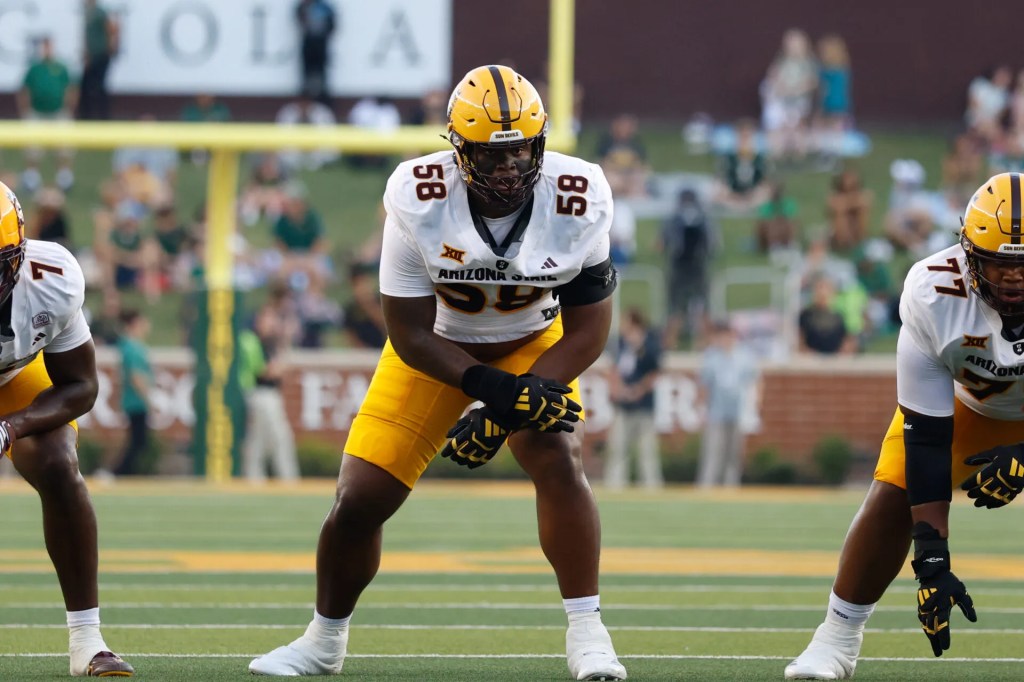
New England deserves credit for turning their Offensive Line from the worst in the NFL in 2024 to a solid unit in 2025, but as the playoffs proved, they still need to add more up front. They do just that with Arizona State RT Max Iheanachor. He has prototypical size and athleticism for the position. At the Combine, he measured in at 6’6”, 321 pounds with 34.5 inch arms and ran a blazing 4.91 40 yard dash with good explosion scores in the jumps. Similar to Armand Membou in last year’s class, Iheanachor did not start playing football until partly through high school. So despite being 24 years old, he is a bit more raw than some OTs his age. Despite this, I think he is ready to start at RT day 1 in the NFL. Iheanachor did a better job matched up against Texas Tech star David Bailey than anyone this year. He is a more polished pass protector than I expected. The length and strength combined with great movement skills gives him the toolbelt to compete with any type of DL. His technique in the run game is a bit of a mess all-around currently, but his traits give him the potential to work in any run scheme with some development. It is rare to see OTs of his size have the ability to play in a wide zone scheme, but Iheanachor has the movement ability to do it. Patriots HC Mike Vrabel was seen working hands-on through hand fighting drills with Iheanachor at the ASU Pro Day and seemed impressed with what he saw. Maybe that was a sneak preview of what direction he plans to go with this pick.
32. Seattle Seahawks
Cashius Howell – EDGE, Texas A&M
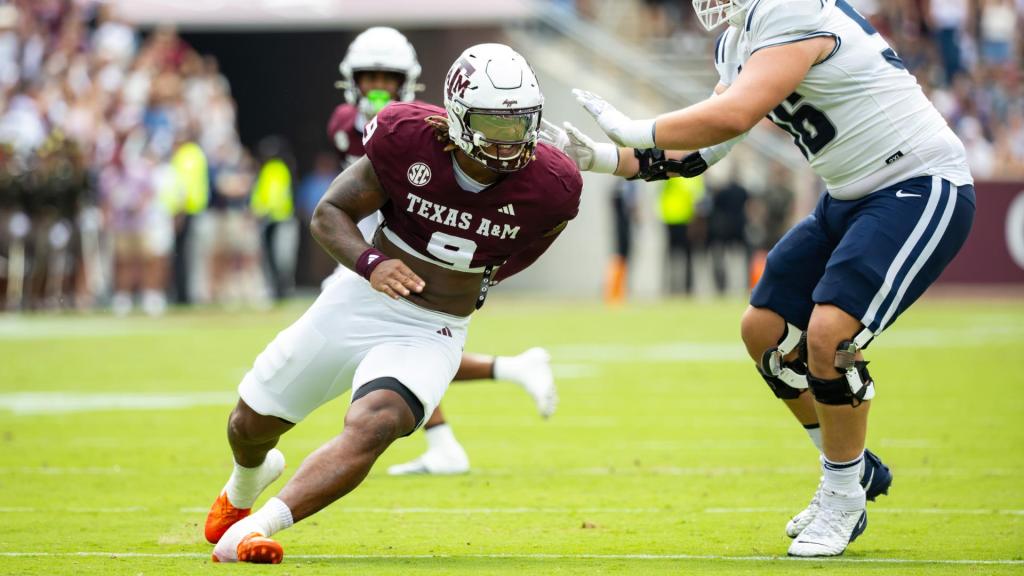
With the final pick of the first round, the Super Bowl champion Seahawks select Cashius Howell, the undersized but bendy EDGE from Texas A&M. While the Seahawks have plenty of talent up front, what made their defense so great last year was the waves of Defensive Linemen that they consistently rotated in and out to stay fresh and dangerous. With those loss of EDGE Boye Mafe to the Bengals, they find his replacement to end round 1 and keep the DL room deep with talent. Howell perfectly encapsulates this Draft full of outliers, unique profiles, and polarizing players. The former Bowling Green Falcon spent his final two seasons at Texas A&M, after a very productive third season at Bowling Green, where he was the definition of a pass rush specialist. In 2025, he was SEC DPOY with 14.0 TFLs and 11.5 sacks for an elite Aggies’ defense. His game is predicated on freakish explosiveness and a lethal first step. Unlike many of the bigger EDGEs in this class, when Howell wins the outside corner, he shows an elite ability to bend around the corner and flatten to the QB. This leads to him finishing more sacks than other players. Howell pairs his elite first step with a good handful of speed moves including a ghost move and a cross-chop. He counters those outside moves with a spin and a strong inside move to keep OTs guessing. With below average size and short arms, he rarely wins with power, but the explosiveness and hand technique is good enough to be a lethal rusher on passing downs. What makes the opinions on Howell so varied is the size and how it affects his game. Howell does not just have short arms, his arm length is 30.25 inches which is the 0th percentile for EDGEs. There was not a single EDGE with arms as short as him from 1999 to 2025 in the Mockdraftable Database. The difference between Howell and Bain is that I don’t notice the short arms on Bain hardly ever. You do notice it with Howell who is also 15-20 pounds lighter than Bain. Like I mentioned, he rarely wins with power as a pass rusher. In the run game, Howell is an absolute liability. He does not have the ability to set the edge consistently, routinely getting blown off the line of scrimmage, and his short arms lead to him struggling to shed blocks when engaged. Howell cannot be an every down player early in his career and it is a question if he will ever play consistently on early down with his size limitations. The question teams must decide: is the pass rushing ability special enough to take him this early if he is only a passing downs player? If he can be a Nik Bonitto or Bryce Huff type of DPR, the answer might be yes. Ideally, I’d feel better about that bet in Round 2, but a Seattle team that already has a deep rotation of DL who can stop the run have the luxury of using Howell as a passing down demon to replace the juice lost from Mafe.
 Blog in the Back with Kelley and Lou
Leave a comment