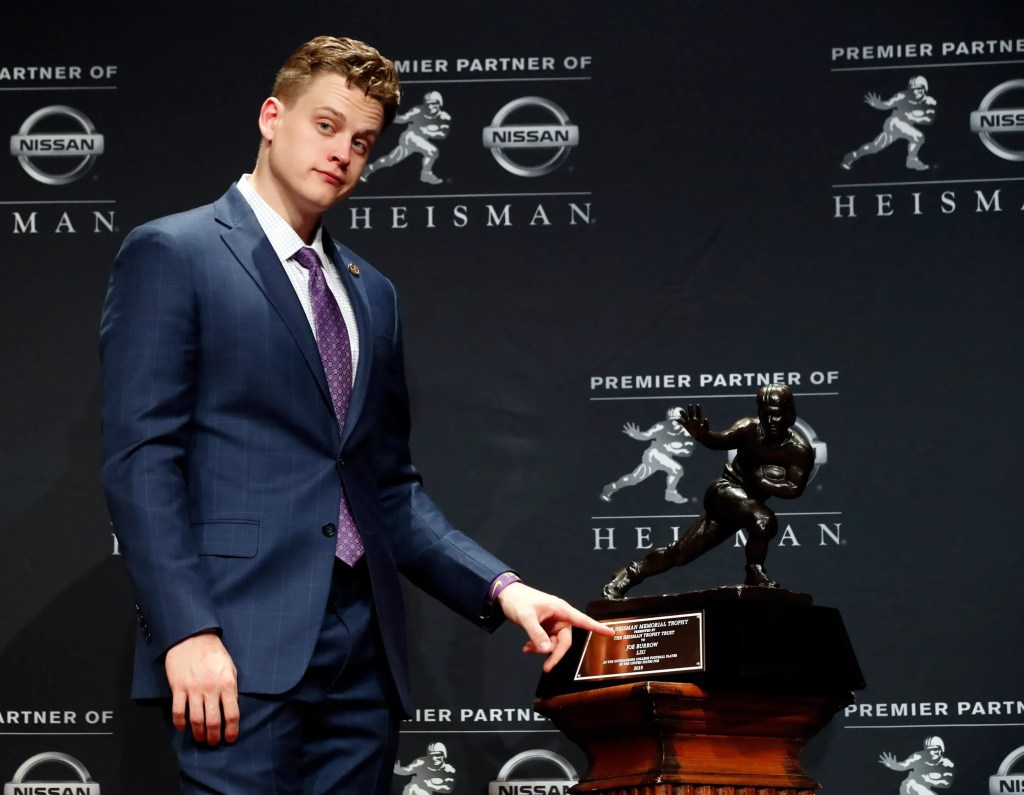
Back in June, Joe Burrow made a pretty bold comparison between the 2026 Cincinnati Bengals and a certain LSU team from seven years ago.
“You go back and watch what I’ve said before. 2019 season at LSU, I feel very similarly about this team.”
Yeah, THAT 2019 LSU team.
The team that went 15-0, won the national championship, featured arguably the greatest offense in college football history, and saw Burrow put together one of the most ridiculous individual seasons the sport has ever seen.
At the time, it was a remarkable statement. The Bengals were coming off three consecutive seasons without a playoff appearance, and while an aggressive offseason had dramatically improved the roster, there were still plenty of questions surrounding the team.
Fast forward five months.
The Bengals are 7-2, winners of five straight, and sitting alone atop the AFC North following a 38-18 demolition of the Pittsburgh Steelers on Sunday Night Football. Burrow is playing the best football of his career, Cincinnati’s offense looks virtually unstoppable, and the defense is finally showing signs of becoming a legitimate complementary unit.
Suddenly, those comments from June don’t sound so crazy.
In fact, the similarities between these Bengals and the 2019 LSU Tigers go a lot deeper than the quarterback wearing #9.
A Familiar Offensive Evolution
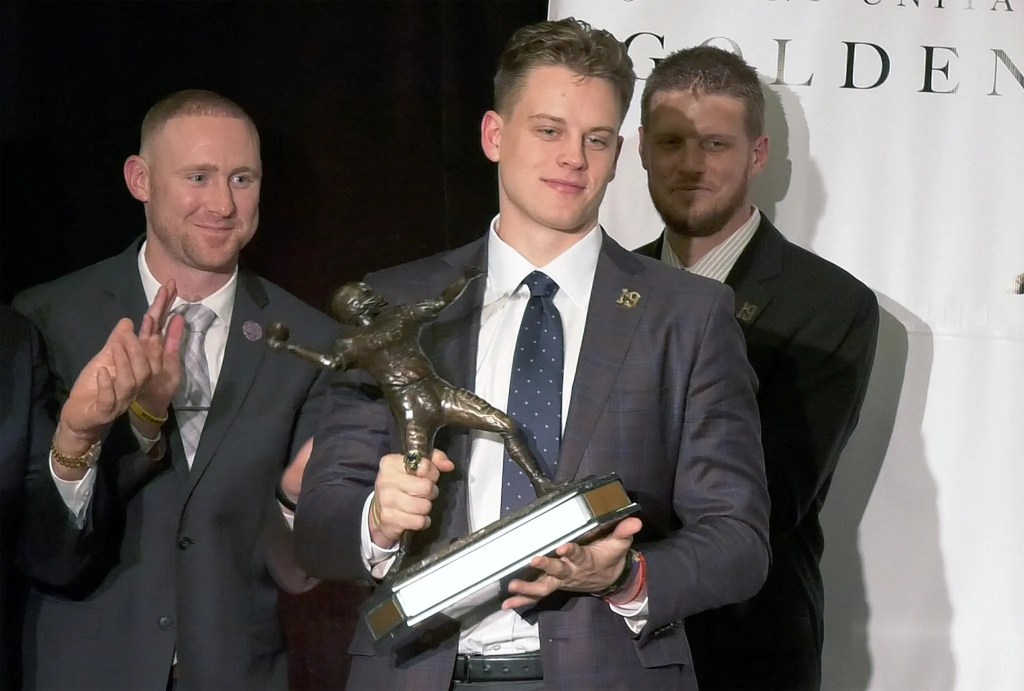
Perhaps the most fascinating similarity between these two teams has nothing to do with the players on the field. It’s how both offenses have evolved around Joe Burrow.
Think back to Burrow’s first season at LSU in 2018.
The Tigers went 10-3, and Burrow was a solid quarterback, throwing for 2,894 yards and 16 touchdowns. It was a good season, but nobody was confusing LSU’s offense with some sort of unstoppable juggernaut.
LSU operated a more traditional offense under Steve Ensminger, featuring heavier personnel packages, a fair amount of under center football, and a rushing attack that struggled to consistently create explosive plays.
Then came Joe Brady.
Ahead of the 2019 season, LSU hired the former New Orleans Saints offensive assistant as its passing game coordinator to help Ensminger modernize the offense.
The Tigers made a complete philosophical shift, spreading defenses out, increasing their usage of three WR sets, incorporating more RPOs, and operating almost exclusively from shotgun.
The numbers behind that transformation are pretty remarkable.
According to Pro Football Focus, LSU operated from non-shotgun formations on 33% of its offensive plays in 2018. That number dropped to just over 3% in 2019.
LSU also increased its usage of 11 personnel by nearly 20% while almost completely eliminating traditional 2 RB personnel packages.
Instead of asking Burrow to operate within the constraints of a more traditional offense, LSU built an offense around what he did best.
We all know what happened next.
Burrow threw for 5,671 yards and 60 touchdowns, won the Heisman Trophy, and led LSU to a national championship.
Now, seven years later, the Bengals appear to be learning a very similar lesson.
Cincinnati entered the 2026 season determined to establish a more balanced offense. Zac Taylor and Dan Pitcher wanted to increase their usage of under center runs, establish a traditional play-action passing game, and become less dependent on Burrow operating out of shotgun.
On paper, it made plenty of sense. The NFL has shifted toward more and more under center offenses. A consistent run game and play-action passing game should make your QB’s life easier.
There was just one problem.
It wasn’t working.
The Bengals struggled to consistently run the football from under center, and the accompanying play-action concepts weren’t providing the advantages the coaching staff had envisioned.
So what did Cincinnati do?
They put the ball back in Joe Burrow’s hands.
And the results have been ridiculous.
Against Baltimore in Week 7, Cincinnati used just 11 under center plays, averaging only 2.4 yards per carry from those looks. The Bengals then leaned almost exclusively on the shotgun passing game during a 35 point second half.
A week later against Tennessee, Cincinnati ran just nine plays from under center while Burrow threw for 462 yards and 5 TDs.
According to Charlie Goldsmith of FOX19, the Bengals led the NFL with 36 shotgun passing attempts per game entering November.
They were also throwing the ball on 60.8% of first downs, the highest rate in the NFL and the second highest first down passing rate of the decade.
Cincinnati has one of the most talented quarterbacks in NFL history, the best receiving duo in football, and an offensive line that is finally capable of consistently protecting its quarterback.
Why are we trying so hard to be something we’re not?
There is obviously value in being able to run the football and operate under center. The vast majority of NFL teams should lean on those things.
But when you have Joe Burrow, Ja’Marr Chase, and Tee Higgins, maybe the best approach is simply to spread everybody out and let your quarterback go to work.
LSU figured that out in 2019.
It looks like Cincinnati is figuring it out in 2026.
The Best Version of a Familiar Offense
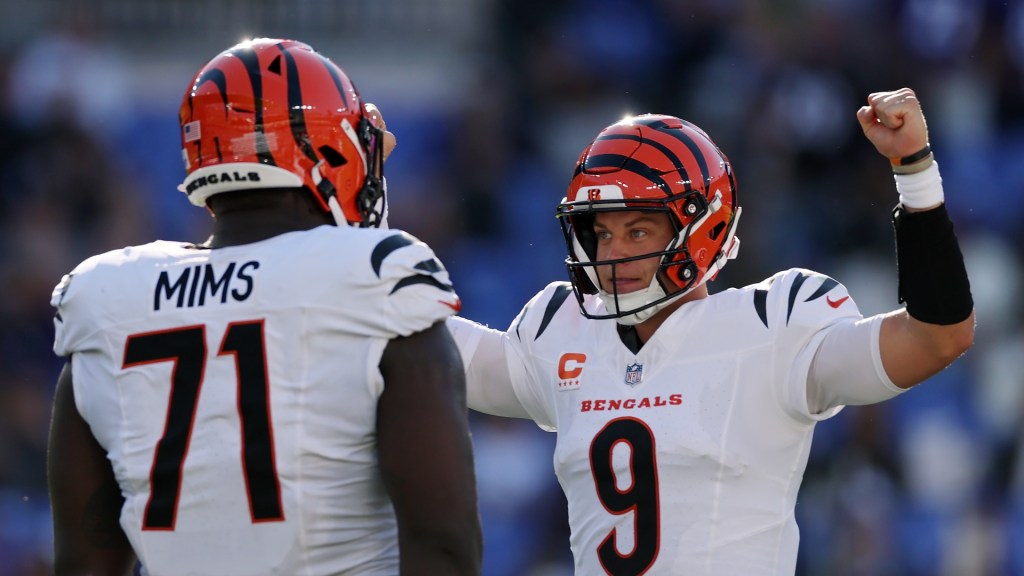
Of course, none of this is exactly new territory for Joe Burrow.
When LSU introduced its revamped offense ahead of the 2019 season, Burrow made a comment that looks pretty remarkable in hindsight.
“Yeah, I’m fired up about it. This is the kind of offense I’ve run since I was 13, 14 years old, so this is what I know so I can have a lot of input in it and tell them what I like.”
That’s right. The offense that helped produce arguably the greatest individual season in college football history wasn’t some revolutionary concept that Joe Brady had to teach Burrow from scratch.
It was a style of football Burrow had been playing since he was a kid growing up in Athens, Ohio.
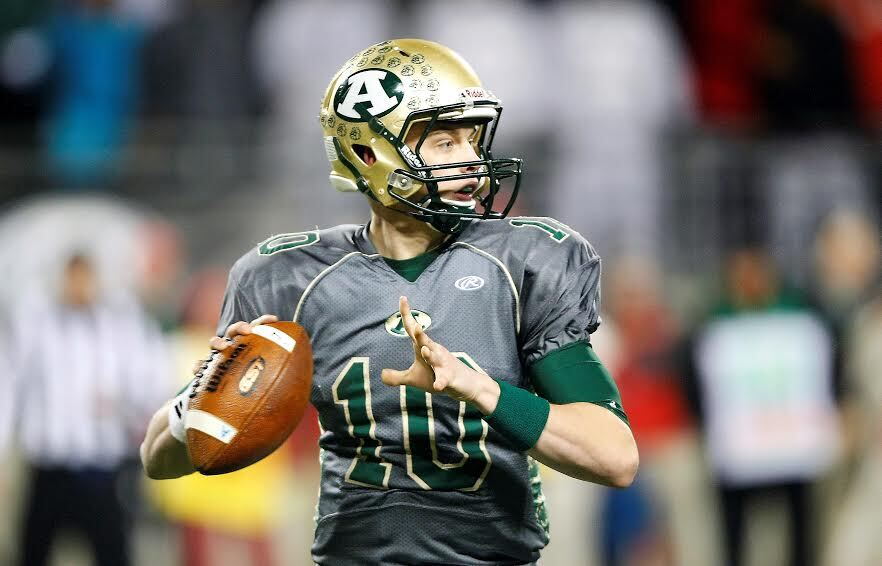
(Side note: The Athens Bulldogs actually used to run the Wing T offense, but when coaches saw a young Burrow’s arm talent, accuracy, and football IQ, they overhauled the entire offensive system to the Spread Offense to maximize his talents. The school had never even won a playoff game before Burrow arrived. Joe led them all the way to the state championship game as a senior).
Brady helped bring that offense to LSU, but Burrow already knew how to operate it.
And in many ways, the same has been true throughout his NFL career.
The Bengals have never been strangers to shotgun-heavy spread football. It was a staple of the offense that reached Super Bowl LVI in 2021, and it remained a foundational piece as Cincinnati made another deep playoff run in 2022.
So what makes this version different?
Two things, in particular.
First, the offensive line is finally playing at a level that allows Cincinnati to fully maximize its passing attack.
And nobody better exemplifies that improvement than Amarius Mims.
The former first-round pick has developed into arguably the best right tackle in football, giving Cincinnati something it hasn’t consistently had throughout Burrow’s career: a legitimate difference maker on the offensive line.
According to Next Gen Stats, Mims has allowed pressure on just 3.3% of his pass blocking snaps, the lowest rate among NFL right tackles.
That’s pretty significant for an offense that wants to spread defenses out and get as many eligible receivers into routes as possible.
For years, Cincinnati’s offensive line has been one of the biggest obstacles preventing Burrow from reaching his full potential. Far too often, the Bengals have needed their quarterback to overcome poor protection to keep the offense moving.
Now, the offensive line is becoming one of the reasons this offense is so difficult to stop.
Second, Joe Burrow has become a significantly more complete quarterback.
Back in 2021, the Bengals terrorized defenses with explosive downfield passing plays. Burrow was lethal when opponents gave him opportunities to attack vertically, particularly against single-high safety looks.
Naturally, defenses adjusted.
Two-high safety structures became increasingly popular against Cincinnati, limiting explosive plays and forcing Burrow to methodically work his way down the field.
The Bengals began developing answers during the 2022 season, but it wasn’t always pretty. Defenses could sit back, keep Chase and Higgins in front of them, and force Cincinnati to execute long drives without making mistakes.
Fast forward to 2026, and Burrow looks like a quarterback who has seen just about everything a defense can throw at him.
Want to play man coverage? Good luck matching up with Chase and Higgins.
Want to sit back in zone coverage and take away explosive plays? Burrow is perfectly content picking you apart underneath, identifying the soft spots in coverage, and finding the open receiver.
This is where I think Burrow has made one of the biggest improvements of his career. He’s gone from a quarterback who could absolutely destroy man coverage and single-high looks to one who consistently makes defenses pay for sitting back in zone, too.
He’s recognizing coverage rotations, processing what defenses are trying to take away, and getting the football to the right player.
And with improved protection up front, he has more opportunities to let those concepts develop, extend plays, and push the ball further downfield.
The results have been nothing short of ridiculous.
Over the last five games, Burrow has produced an astonishing +0.43 expected points added (EPA) per dropback.
For context, EPA measures how much each play improves or worsens an offense’s expected scoring output. In 2021, when Cincinnati made the Super Bowl, Burrow produced +0.19 EPA per dropback. A typical MVP level QB season is around +0.30 EPA per dropback. The level Burrow is playing at right now is almost unheard of. Absurd efficiency, especially over a five game sample.
And it’s not as if the Bengals have suddenly discovered some revolutionary new offensive system. They’ve been operating from shotgun and spreading defenses out for years.
The difference is that Burrow is now playing behind an offensive line capable of holding up in obvious passing situations, and he’s become significantly better at defeating the coverage structures defenses have used to slow Cincinnati down in the past.
We’ve seen Joe Burrow thrive in this offensive system before. We’ve seen him put up ridiculous numbers. We’ve seen the Bengals reach a Super Bowl and come within one game of another.
But I’m not sure we’ve ever seen all the pieces come together quite like this.
Burrow has always been at his best playing this brand of football.
Now, with an improved offensive line and a quarterback who has seemingly solved the entire concept of zone defense, we’re seeing what might be its ultimate evolution.
A Historic Collection of Playmakers
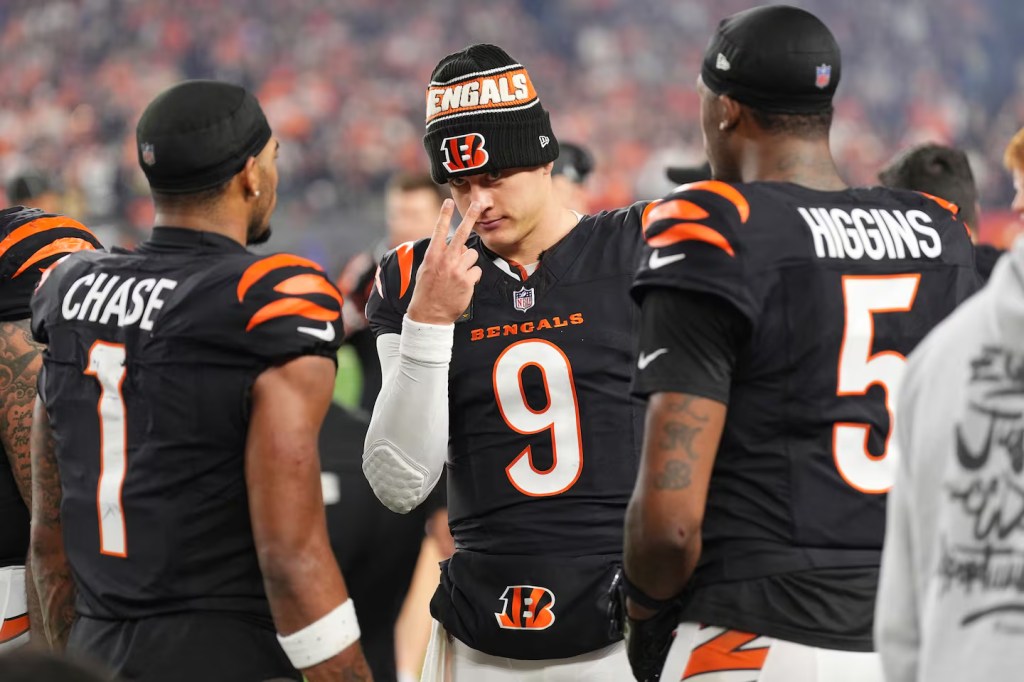
Of course, it doesn’t hurt to have some pretty ridiculous weapons surrounding your quarterback.
The 2019 LSU offense featured one of the greatest collections of skill position talent in college football history.
Ja’Marr Chase. Justin Jefferson. Terrace Marshall Jr. Clyde Edwards-Helaire.
Chase and Jefferson were arguably the best receiver duo in college football history, combining for over 3,300 receiving yards and 38 touchdowns.
Edwards-Helaire was an outstanding fit in the Tigers’ spread attack, consistently making defenders miss in space while providing another dangerous receiving option out of the backfield.
Sound familiar?
The 2026 Bengals have an incredible collection of offensive talent themselves.
Chase has somehow continued to develop into an even better player than the one who dominated college football alongside Burrow. Higgins is one of the best receivers in the league in his own right, and Chase Brown provides another dangerous weapon in both the running and passing game.
And Cincinnati’s offensive depth goes well beyond those three.
Mike Gesicki creates matchup problems for linebackers and safeties, while players like Samaje Perine and Drew Sample have given Burrow additional options in both pass protection and checkdowns opportunities.
This is the beauty of the offense Cincinnati is currently running.
When you spread defenses out, force them to account for Chase and Higgins, and give Burrow the ability to identify favorable matchups before and after the snap, somebody is almost always going to have an opportunity to make a play.
And unlike some of the earlier Bengals offenses, Burrow doesn’t have to rely exclusively on explosive throws downfield.
Cincinnati can create big plays through the quick passing game, screens, intermediate concepts, and receivers making plays after the catch.
Need an example of just how difficult this offense is to defend?
Look no further than Sunday night against Pittsburgh.
Burrow threw for 409 yards and four touchdowns, while Chase caught 11 passes for 231 yards. Three different Bengals caught TDs and none of them were Ja’Marr, Tee, or Mike G.
The Steelers entered the game looking to take control of the AFC North.
Instead, they were completely overwhelmed.
Burrow has now accounted for at least four touchdowns in five consecutive games, joining Peyton Manning as the only quarterbacks in NFL history to accomplish that feat.
That’s some pretty remarkable company.
The 2019 LSU offense was historic because it had answers for virtually anything opposing defenses threw at it.
The 2026 Bengals are starting to look an awful lot like that, too.
A Defense That Is Finally Holding Up Its End of the Bargain
Here’s another similarity worth discussing.
As dominant as the 2019 LSU offense was, its defense wasn’t exactly perfect.
The Tigers had NFL talent all over the field, including Derek Stingley Jr., Patrick Queen, Grant Delpit, and K’Lavon Chaisson.
But that didn’t always translate into dominant performances early in the season.
LSU surrendered 38 points to Vanderbilt, 38 to Texas, and 41 to Alabama (one of the best college football games ever). The Tigers had one of the best offenses college football had ever seen, but there were legitimate questions about whether the defense could hold up against championship level competition.
As the season progressed, however, the defense improved.
LSU held Georgia to 10 points in the SEC Championship Game and limited Oklahoma to 28 points in the College Football Playoff semifinal, with most of those points coming after the game was already out of reach.
By the time the national championship game arrived, LSU had developed into a more complete team.
The Bengals are hoping to follow a similar path.
For the past few seasons, Cincinnati’s defense has been the biggest thing holding this team back.
The offense has consistently been good enough to compete with anybody, but far too often Burrow has been asked to win shootouts because the defense couldn’t consistently get stops.
That’s why the Bengals’ aggressive offseason was so important.
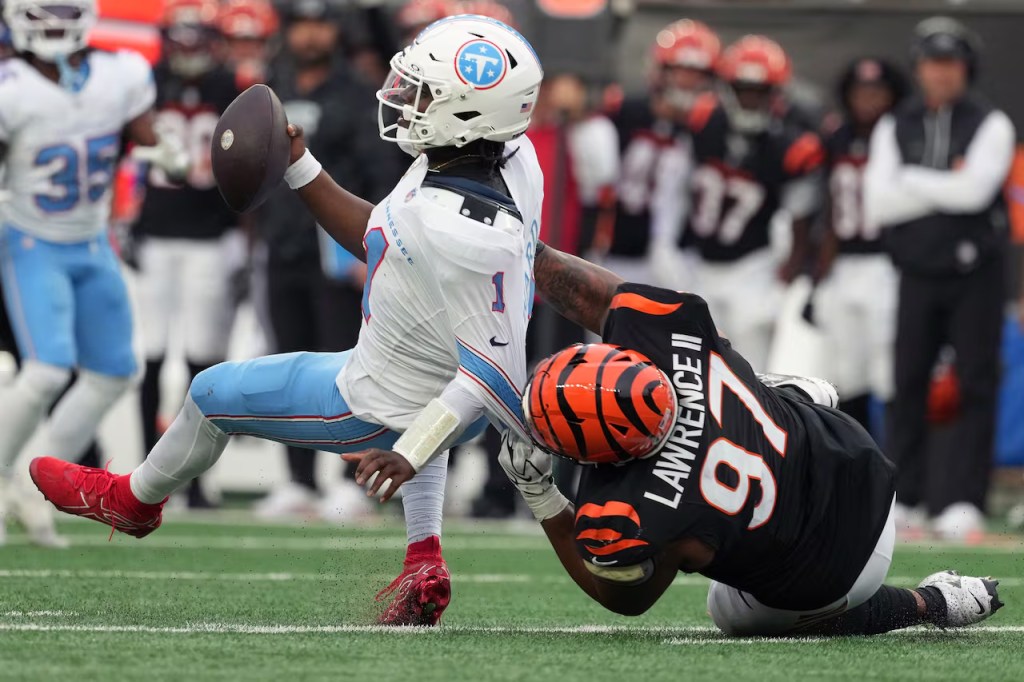
Back in April, I wrote about Cincinnati pushing its chips in with the blockbuster acquisition of Dexter Lawrence.
The Bengals weren’t just adding another good defensive lineman. They were adding a legitimate game changing player capable of transforming how offenses have to prepare for their defense.
And the front office didn’t stop there.
Jonathan Allen, Boye Mafe, and Bryan Cook were among the additions made to strengthen a unit that desperately needed an infusion of talent.
The results haven’t been perfect, but the defense is showing encouraging signs.
Against Pittsburgh, the Bengals held Aaron Rodgers and the Steelers to just 18 points and 222 total yards. Allen, Mafe, and Myles Murphy all recorded sacks.
That’s the kind of defensive performance Cincinnati needs if it wants to make a deep playoff run.
The Bengals don’t necessarily need to have the best defense in the NFL.
With Burrow playing like this, they just need a defense capable of consistently pressuring opposing quarterbacks, limiting explosive plays, and getting the ball back to the offense.
And if this group continues to improve as the season progresses, the Bengals could find themselves in a very similar situation to LSU in late 2019.
An unstoppable offense paired with a defense that is becoming good enough to win a championship.
Joe Burrow Saw This Coming
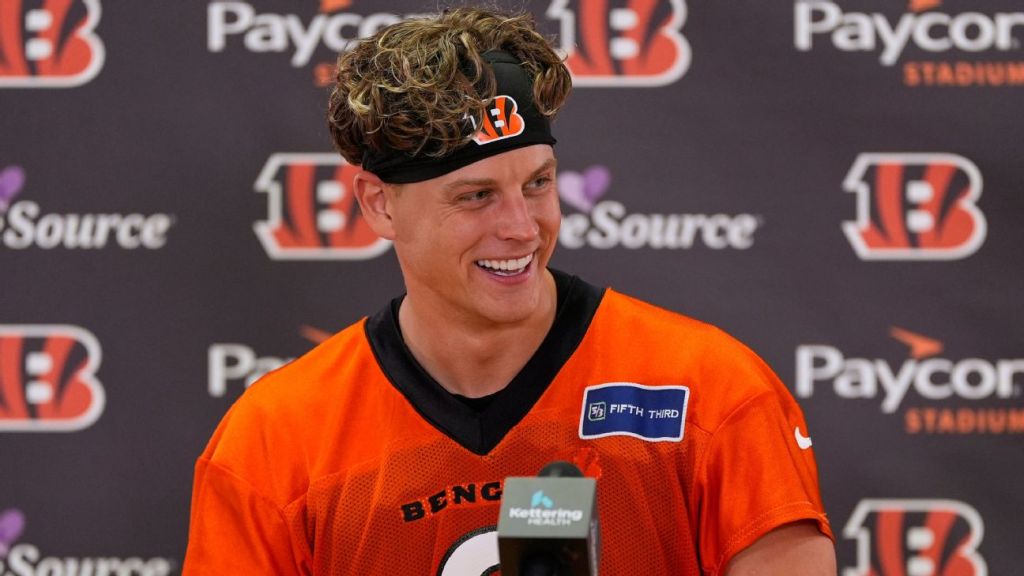
Of course, the Bengals haven’t won anything yet.
There is still a long way to go, and a 7-2 start doesn’t guarantee anything in the NFL. Cincinnati still has to navigate a loaded AFC, continue improving defensively, and prove it can maintain this level of offensive production against the league’s best teams.
And comparing an NFL team to one of the greatest college football teams of all time is never going to be perfect.
But nine games into the season, it’s becoming increasingly difficult to dismiss what Joe Burrow told us back in June.
The similarities are everywhere.
A philosophical shift toward a shotgun-heavy spread passing attack. An extraordinary collection of offensive weapons. A defense that is beginning to find its footing. And, of course, a quarterback playing at a level that very few players in the history of football have ever reached.
But perhaps the most important similarity is the way both teams have embraced what makes Burrow special.
In 2019, LSU stopped trying to fit Burrow into a traditional offense and instead built one around the style of football he had played his entire life.
In 2026, Cincinnati experimented with a more traditional approach before realizing that the best version of its offense might be the one that puts as much responsibility as possible on its franchise quarterback.
The difference this time?
Burrow is seven years older, significantly more experienced, better equipped to defeat the different coverages defenses throw at him, and finally playing behind an offensive line that allows him to consistently operate at the highest level.
The Bengals aren’t necessarily trying to recreate 2019 LSU.
They’re showing what happens when a quarterback who has spent his entire life mastering this style of football reaches the height of his powers.
Back in June, Burrow believed this team had a chance to be special.
Nine games later, we’re starting to understand why.
Maybe we should have listened.


Leave a Reply